Tag: public administration

  • The state of British politics today

    The state of British politics today

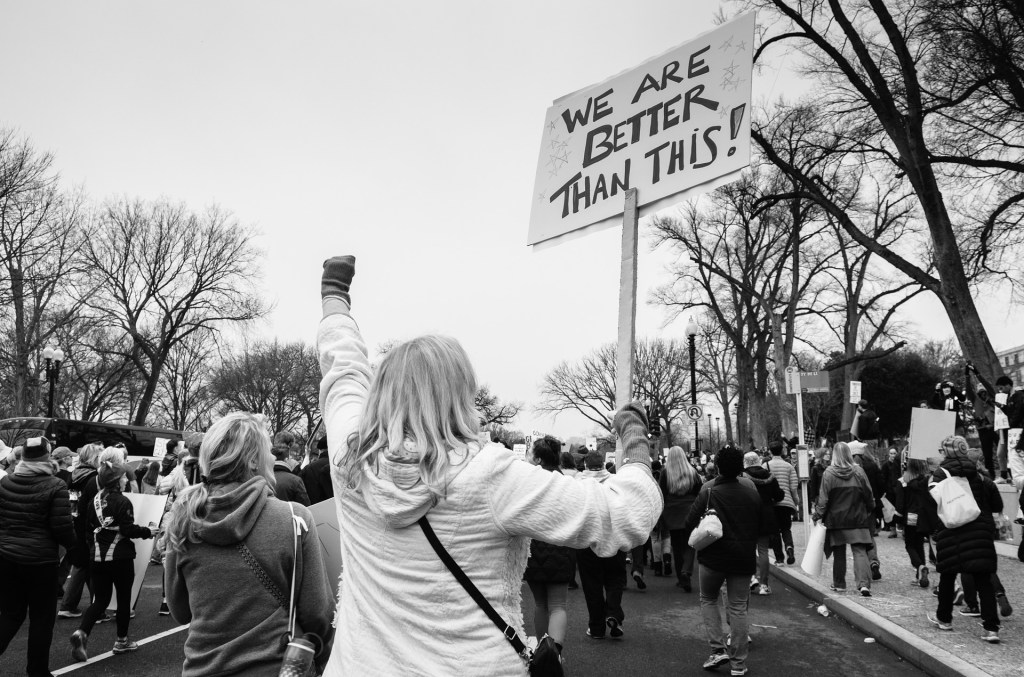
    There is a growing sense both in Britain and abroad that standards of UK public life have fallen to an all-time low. In a recent speech, the former Prime Minister, The Rt Hon Sir John Major, stated:

    If trust in our word is lost overseas, we may no longer be able to work effectively with friends and partners for mutual benefit – or even security. Unfortunately, that trust is being lost, and our reputation overseas has fallen because of our conduct. We are weakening our influence in the world.

    And the Speaker of the House, Sir Lindsay Hoyle, felt obliged to remind MPs that, ‘our words have consequences and we should always be mindful of that fact’. This was in response to intimidating and threatening behaviour experienced by the Leader of the Opposition and Shadow Foreign Secretary following comments by the Prime Minister which were deemed inappropriate (though not disorderly).

    What we are seeing today is the consequence of decades of under-investment in public administration education, professional development, and research. Where there have been innovative policy experiments, they have typically taken place without formal evaluation and valuable learning has been lost. The potential creation of a Government Campus and Leadership College for Government offers some hope but only if the lessons from the RIPA, the Civil Service College, and the National School of Government (all now closed) are taken on board.

    NB: This is a truncated version of a piece which appeared on the LSE British Politics and Policy blog here: https://blogs.lse.ac.uk/politicsandpolicy/public-administration-british-politics/ . It is based upon research published in Public Administration here and in the Handbook of Teaching Public Administration here.

  • Academic podcasts

    Academic podcasts

    This blog post was stimulated by a discussion I had recently on Twitter and LinkedIn about academic podcasts.

    For some time now I’ve been a big fan of the Academics of PA podcast. This is a podcast hosted by Bruce McDonald (North Carolina State University), Josie Schafer (University of Nebraska Omaha) and Will Hatcher (Augusta University). In it they interview some of the most well known academics in public administration and public management (particularly from the US). It has been fascinating to hear about how others have developed their careers, some of the challenges they have faced and what they have learned as a result. It has been especially valuable to hear from prominent professors about issues related to work-life balance.

    I was keen to find other academic podcasts that I might also enjoy. This led me to post a question on LinkedIn, and then on Twitter, asking for some recommendations. Interestingly, there are so many more podcasts out there that I wasn’t aware of. Rather than provide an extensive list here I would recommend that you look at the lists provided by Sue Beckingham here: https://socialmediaforlearning.com/2020/12/22/easy-listening-a-collection-of-higher-education-podcasts/ and by Erika Smith here: https://docs.google.com/document/d/1e2MXj34YCt_9bKqGZZEwIBlnxXe4qgs04ISJyLdDTko/mobilebasic

    From my own perspective I have a real interest in podcasts that relate to my own subject of public administration and management. The above mentioned Academics of PA is a particularly good example of this. From a more practical perspective, and due to my own interest in Scottish public affairs, I also enjoy listening to Politically Speaking which is hosted by Mandy Rhodes, editor of Holyrood Magazine. Finally, although it is a YouTube channel as opposed to a podcast, Public Administration Xchange by Colin Talbot provides some excellent interviews with public administration academics and practitioners.

    Given my interest in podcasts related to public administration and management I was delighted when Russ Glennon, from Manchester Metropolitan University, approached me about the potential for doing a podcast like Academics of PA but with a more UK slant on things. In the dark days of late 2020 this seemed like a terrific idea, being able to work with Russ and Karin Bottom (INLOGOV), having some fun chat, and building on what had been done by Bruce, Josie and Will. And so the idea of Public Service Podcasting was born.

    In Public Service Podcasting we aim to spread the word about public administration and management scholarship. I’m super excited to be part of the team hosting discussions with some amazing academics from the UK and beyond. Our first episode will be launching soon – make sure to follow us on Twitter to find out more!

  • Organisational Learning and Change in a Public Sector Context

    Organisational Learning and Change in a Public Sector Context

    This is a brief summary of my research on organisational learning and change as published in Teaching Public Administration in February 2020.

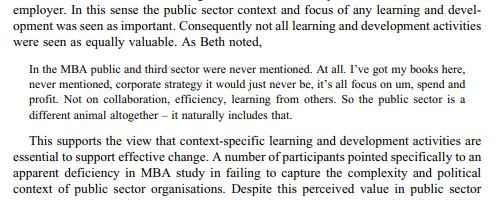
    In this article I spoke to a wide range of public sector managers about their experiences of being involved in a public leadership degree programme. I was interested to know what they saw as being the benefits of this learning experience and how it had influenced their practice.

    In this article I discuss the nature of the budget cuts that took place across public sector organisations and particularly how learning and development budgets were seen to be an easy target. I then discuss how the participants had encountered barriers to change and what they felt needed to happen to enable innovation and change.

    One aspect highlighted was the extent to which it was seen as important that any learning and development was sector specific as the following extract highlights:

    The full Open Access (free) article is available here: https://doi.org/10.1177/0144739420903783

    I have provided a 2 minute summary of the research here:

    This research has been referenced in an Institute for Government report into civil service skills development and in a literature review for the UK Government on organisational effectiveness and collaboration.

    More research related to learning and development in public service organisations can be found here:

    Gibb, S., Ishaq, M., Elliott, I.C. & Hussain, A.M. (2020) Fair and decent work in Scotland’s local authorities: evidence and challenges, Public Money & Management, DOI: 10.1080/09540962.2020.1723262

    Elliott, I.C., Sinclair, C. and Hesselgreaves, H. (2020) “Leadership of Integrated Health and Social Care Services”, Scottish Affairs, 29 (2): 198-222. DOI: https://doi.org/10.3366/scot.2020.0316.

  • Researching COVID-19

    Researching COVID-19

    Coronavirus, or Covid-19, has dominated the news headlines for most of 2020. It has affected every country, every community, everyone. The impact is likely to last for years. What can academia offer in the face of this global public health disaster?

    I was honoured to be included, in my role as PAC Chair, in the below discussion on the UK Government response to Covid-19 earlier this year.

    cc BRITISH PUBLIC ADMINISTRATION EXCHANGE

    Following this discussion the co-editors of our esteemed academic journal, Public Policy and Administration (PPA), have set out seven key research themes where PPA scholars may contribute to our wider understanding of Covid-19. These are published in the October issue of PPA and available online now (Dunlop et al. 2020).

     Dunlop, C. A., Ongaro, E., & Baker, K. (2020). “Researching COVID-19: A research agenda for public policy and administration scholars”. Public Policy and Administration, 35(4), 365–383. https://doi.org/10.1177/0952076720939631

  • Some links and research on teaching of public administration

    Some links and research on teaching of public administration

    I’ve been really surprised by the response to a recent Tweet of mine about the state of public administration teaching in the UK.

    This Tweet was stimulated by a brief conversation I had with an academic at another UK business school. They were raising the fact that public administration was not taught at their institution. This is a very common picture which has been researched widely within the UK public administration community. I’ve also heard anecdotal stories from academics suggesting that there is a hostility towards anything public sector related. One such story was that a senior academic was told not to even mention the words ‘public sector’.

    This contrasts with my own experience. I work at Northumbria University where there is a long history of public administration teaching and research. Currently I teach on our MSc Strategic Leadership for Public Services programme and supervise three doctoral students who are all exploring issues related to the public sector. We also have one of the largest cohorts of public administration scholars in the UK. More on how we are leading the public administration revival here.

    Debates around the nature of the subject often centre around the nature and legacy of New Public Management (NPM). This was a theoretical approach which suggested that business techniques could (and even should) be applied to the public sector in order to enhance efficiency and effectiveness. Many of the central arguments of NPM have since been debunked.

    Yet issues related to the unique public service context are often not fully considered in teaching of business and management. This is despite the public sector making up c.17% of UK employment and c.35% of GDP. It also fails to recognise that the private sector needs an effective public sector to support the infrastructure, culture, society and people needed for business to flourish. At the same time many public services are themselves delivered by the private sector (and increasingly the Third Sector).

    This is why the UK Learned Society for public policy and administration – the JUC Public Administration Committee – have called on the public service context to be a more explicit part of undergraduate business and management degree programmes: https://www.juc.ac.uk/wp-content/uploads/2019/09/PAC-Position-Statement-on-QAA-Subject-Benchmarks.pdf

    I am continuing to research this issue. However, in the meantime please see the following references which list just some of the research that documents the history of UK public administration.

    Some useful references:

    Barbaris, P. (2012). Thinking about the state, talking bureaucracy, teaching public administration. Teaching Public Administration, 30 (2): 76-91. DOI: 10.1177/0144739412462232

    Boyne, G. (1996). The Intellectual Crisis in in British Public Administration: Is Public Management the Problem or the Solution?, Public Administration, 74, 679-694.

    Boyne, G. (2002). Public and Private Management: What’s the Difference? Journal of Management Studies, 39, 97-122. doi: 10.1111/1467-6486.00284

    Carmichael, P. (2004). ‘Shackled to a Corpse?’ – A Reply to Howard Elcock. Public Policy and Administration, 19(2), 8–12. https://doi.org/10.1177/095207670401900203

    Chandler, J. (1991). Public Administration: a Discipline in Decline, Teaching Public Administration, 11, 39-45.

    Chandler, J. (2002). Deregulation and the Decline of Public Administration Teaching in the UK, Public Administration, 80, 375-390.

    Chapman, R.A. (1973) Teaching Public Administration. Joint University Council for Social and Public Administration, Hamilton House, London.

    Chapman, R.A. (1993), THE DEMISE OF THE RIPA — AN IDEA SHATTERED. Australian Journal of Public Administration, 52: 466-474. doi:10.1111/j.1467-8500.1993.tb00302.x

    Chapman, R.A.C. (2007), “Joint University Council and the background to public policy and administration?”, Public Policy & Administration, Vol. 22 No. 1, pp. 7-26.

    Davies, M. R., Greenwood, J., & Robins, L. (1995). Public Administration Education and Training: Globalization or Fragmentation? International Review of Administrative Sciences, 61(1), 73–78. https://doi.org/10.1177/002085239506100106

    Diamond, J, Liddle, J (2012) Reflections and speculations on teaching and learning in public administration. Public Policy and Administration 27(3): 265–277

    Elcock, H. (1991). Change and Decay? Public Administration in the 1990s. London, Longman.

    Elcock, H. (2004). Public Administration: Why Are We in the Mess We’re In? Public Policy and Administration, 19(2), 3–7. https://doi.org/10.1177/095207670401900202

    Elcock, H. (2013). Local Government: Policy and Management in Local Authorities. London, Routledge.

    Elliott, I.C. (2017), Verbal contribution to PSA/JUC Debate on the Future of Public Administration, PSA Annual Conference, University of Strathclyde, April 10.

    Elliottt, I.C. (2018). Marking the 100th anniversary of the UK Joint University Council and anticipating the next… Teaching Public Administration, 36(1), 3–5. https://doi.org/10.1177/0144739418763847

    Elliott, I.C. (2020). Organisational learning and change in a public sector context. Teaching Public Administration. https://doi.org/10.1177/0144739420903783

    Fenwick, J., & McMillan, J. (2014). Public Administration: What is it, why teach it and does it matter? Teaching Public Administration, 32(2), 194–204. https://doi.org/10.1177/0144739414522479

    Gray, A, Jenkins, B (1995) From Public Administration to Public Management: Reassessing a Revolution. Public Administration 73(1): 75–99.

    Greenwood, J (1999) The Demise of Traditional Teaching: Public Administration in Britain. Teaching Public Administration 19(1): 53–61.

    Greenwood, J. and Eggins, H. (1995) Shifting Sands: Teaching Public Administration in a Climate of Change. Public Administration 73(1): 143–63.

    Hood, C (2011) It’s public administration, Rod, but maybe not as we know it: British public administration in the 2000s. Public Administration 89(1): 128–139.

    Howell, D. A. (1974). Public Administration and Educational Administration: Some Thoughts on the Chapman Report, “Teaching Public Administration.” Educational Administration Bulletin, 2(2), 32–37. https://doi.org/10.1177/174114327400200207

    Jones, A. (2012). Where Has All the Public Administration Gone? Teaching Public Administration, 30, 124-132.

    Liddle, J. (2017), “Is there still a need for teaching and research in public administration and management? A personal view from the UK”, International Journal of Public Sector Management, Vol. 30 No. 6-7, pp. 575-583. https://doi.org/10.1108/IJPSM-06-2017-0160

    Miller, K. (2012). The Future of the Discipline: Trends in Public Sector Management. In J. Diamond, & J. Liddle. (Eds.) Trends in Public Management: an Age of Austerity. Bingley: Emerald Group Publishing.

    Raadschelders, J.C.N. (1999) A coherent framework for the study of public administration. Journal of Public Administration Research and Theory 9(2): 281–303. https://doi.org/10.1093/oxfordjournals.jpart.a024411

    Rhodes, R, Dargie, C, Melville, A, Tutt, B (1995) The State of Public Administration: A Professional History, 1970–1995. Public Administration 73(1): 1–15.

    Rhodes, R. A. W. 1996. ‘From institutions to dogma: tradition, eclecticism and ideology in the study of British public administration’ Public Administration Review, 56 (6): 507–16.

    Ridley, F. F. (1972). Public Administration: Cause for Discontent. Public Administration, 50(1), 65–78. https://doi.org/10.1111/j.1467-9299.1972.tb00081.x

    Robson, W. A. (1975). The Study of Public Administration Then and Now. Political Studies23(2–3), 193–201. https://doi.org/10.1111/j.1467-9248.1975.tb00060.x

    SHELLEY, I. (1993), WHAT HAPPENED TO THE RIPA?. Public Administration, 71: 471-490. doi:10.1111/j.1467-9299.1993.tb00987.x

  • PAC Annual Conference – Closing Address 2019

    PAC Annual Conference – Closing Address 2019

    Did you enjoy our annual conference? I hope you did! This year we had almost 100 abstracts submitted from delegates across 12 countries. It has been the largest and most international PAC Annual Conference in many years.

    People often ask me why I do it. Why be Chair of the PAC? Why convene the annual conference? I know that the drive within academia is towards more and more instrumentalism – and the time it takes to do these things I could be writing research bids or journal papers. But I hope that you can see, having participated in the sessions, heard from Professor Barbara Crosby and Rt Hon Baroness Grey-Thompson, and had fun at the conference dinner, why I feel it is a great privilege and honour to serve as your Chair.

    The Joint University Council is the UK Learned Society for pubic administration, public policy and social work. As such we have a very important position as the voice of the public administration community. We therefore have the ability to inform and shape the nature of our subject. At this conference there have been many great ground-breaking pieces of research presented but also three things that will help to shape our subject in the future:

    1. The conference theme

    We made the conscious decision to include marginalisation within the conference theme. This was in recognition that we need to do more to include aspects of marginalisation within our subject. And it was great to see some papers exploring issues related to BAME communities, LGBTQ+ issues and alternative methodological approaches such as post-structuralism and critical realism. For some time now public administration has been a marginalised subject – particularly within business schools. We are lucky that, at Northumbria University, the subject is valued but that is not the case for many of our colleagues and so we have an important role to play in both advocating for more public administration but also pushing the boundaries of what public administration is and who it involves.

    2. REF Post-2021

    Within the conference packs you will have seen our REF Post-2021 Position Statement. This was developed with the PAC together with colleagues from the special interest groups from the Political Studies Association (PSA) and British Academy of Management (BAM). The statement sets out how important public administration research is and how, in particular within the Unit of Assessment C17, it forms a large part of the submissions.

    3. QAA Subject Benchmark Statements

    Alongside our position statement on the REF Post-2021 we also have developed a position statement on the QAA Subject Benchmark Statements. Again this was developed with colleagues from the relevant special interest groups from the PSA and BAM. This statement highlights the importance of public services to the economy and for employment. In order to ensure undergraduate students, particularly those graduating with management degrees, are equipped for employment in the mixed employment it is important that public services feature more widely in management degrees.

    All these developments highlight how public management and administration is changing. How many people are attending the conference here for the first time? I can see many new faces. You also represent change and by working together, within our learned society, you can play a role in shaping the nature of our subject in the future. We also have two new members of the PAC executive – Dr Karin Bottom is our new Vice-Chair for Teaching and Learning and Dr Russ Glennon is our new Vice-Chair for Research. We are growing and we are changing.

    This leads me on to our doctoral researchers. On Monday we held our Doctoral Conference. It was well attended and I was incredibly impressed by the quality of the papers presented. Across the board there were excellent presentations. This made it a very difficult task for both Karin and I in coming to a decision on the Richard Chapman Prize for best doctoral paper. We judged this on a number of criteria including the currency of the research, how it contributes to the field, the quality of the paper and how it fits with the overall conference theme. It was a difficult decision and in the end we have awarded the Richard Chapman Prize along with two additional Highly Commended awards.

    Winner of the Richard Chapman Prize in 2019 is Dayo Eseonu from University of Manchester for her paper on “Co-production as social innovation: new wine or new skin for the inclusion of “hard-to-reach” groups in service delivery’.

    We award ‘Highly Commended’ to Sean McCulloch from Northumbria University for his paper on ‘Facilitating change from within complex systems: the impact of individual change agents in the NHS’ and to Emma Reith from University of Birmingham for his paper on ‘Research at the margins: the trials and tribulations of stepping outside of one’s disciplinary norms’.

    The quality of these papers, and all those presented at the doctoral conference, represent how bright our future is as a subject. We are the only UK Learned Society to represent public administration and social work and it we have a vital role to play in ensuring that our doctoral researchers, early career researchers and academics at all levels are supported. We have a strong position in doing this. We have two journals: Public Policy and Management and Teaching Public Administration, we have our annual conference, we have successfully nominated REF panel members to both the Politics and Business Management panels, we have nominated fellows of the Academy of Social Sciences, we have nominated fellows to the JUC, we also provide funding and other support to those within our member institutions.

    I am delighted to confirm that the two funding competitions – for a research seminar series and for a small research grant – will be announced to all member institutions very soon. We also have an opening for treasurer of the JUC. So there are lots of ways to get involved – please contact me or either of my Vice-Chairs if you would like to find out more.

    Thank you colleagues for all your participation over the last three days. I will now hand over to Alistair Jones, from De Montfort University, who will introduce you to the PAC Annual Conference 2020!

  • Public Administration and Social Work at the Margins – An International Conference

    The Joint University Council for the Applied Social Sciences (JUC) is holding it’s annual conference at Northumbria University on 17-18 September 2019. The theme of the conference is ‘Public Administration and Social Work at the Margins’. Find out more here: www.northumbria.ac.uk/JUC2019

    Key features of the conference include:

    • The Frank Stacey Address delivered by Rt Hon Baroness Grey-Thompson, Chancellor of Northumbria University, former Paralympian and Crossbench Peer
    • Academic keynote on ‘Integrative Leadership in Tumultuous Times: Claiming the Center’ delivered by Professor Barbara Crosby, Humphrey School of Public Affairs, University of Minnesota
    • ‘Meet the Editors’ Lunchtime Session with Professor John Diamond (Teaching Public Administration) and Professors Claire Dunlop and Edoardo Ongaro (Public Policy and Administration)
    • Exhibition stands by academic publishers of latest books/journals and other publications
    • A social programme including walking tour of the Ouse Burn on evening of 16 September and conference dinner on 17 September.

    The idea for the conference theme came about through discussion on the state of the subject of public administration and public management (particularly in the UK context). The subject area has been subject to significant challenge in the last 20-30 years and, alongside the alignment of public administration with Business Schools, there has been a slow and steady decline in the teaching of public administration and public management. This has left some UK scholars feeling marginalised within their own institutions and, more generally, within UK Higher Education.

    At the same time the UK, and specifically public administration within the UK, is at risk of becoming marginalised within Europe. Brexit looms large over all aspects of public policy and administration. It also poses significant challenges for UK business which consequently may then have an impact on economic growth and tax receipts. The uncertainty around Brexit and continued economic slump may lead to ongoing austerity for years to come – placing UK public administration at odds with the rest of Europe.

    Finally, questions need to be asked about the content, delivery style and assessment of public administration programmes such as MPA’s. Do they adequately address issues of marginalisation? How can universities best support public service organisations to address inequality in the context of ongoing austerity? Whilst politics is in disarray our public servants must continue to deliver good public administration and social work to some of the most vulnerable in our society.  As such we want to encourage submissions of abstracts that explore issues of race, gender identity, sexuality, variability and class.

    In addressing many of these challenges collaboration and collective leadership is required. At Northumbria University we are leading a public administration revival through our research activities, including the 3PM Research Interest Group, and teaching of public leadership, including the MSc Strategic Leadership for Public Services. This conference marks a great opportunity for scholars and practitioners to come to our campus in Newcastle-Upon-Tyne to share the latest thinking on how our public services can work together to tackle inequality and challenge marginalisation. Find out more about the conference here: www.northumbria.ac.uk/JUC2019

    Key dates:

    • Abstract submissions – Friday 31 May
    • Feedback on abstracts – by 30 June
    • Full papers due – 31 August
    • Conference walking tour – evening of 16 September
    • Conference start – morning of 17 September
    • Conference dinner – evening of 17 September
    • Conference finish – evening of 18 September

    Submit your abstract now:
    https://app.geckoform.com/public/?_ga=2.178698471.297039799.1557340916-551790689.1545312066#/modern/21FO0085pnoxur00ghisdbvlo9

  • 3PM Research Seminar Series 2019

    3PM Research Seminar Series 2019

    The Public Policy and Public Management (3PM) Research Interest Group at Newcastle Business School, Northumbria University, are hosting a research seminar series over this coming academic semester. The seminars will bring some of the top scholars of public policy and administration to Newcastle to discuss their latest research.

    Each of the seminars is listed below. Click on the links to reserve your FREE place:

    23 January 2019: Street-Level Bureaucrats and Conflicts – interpersonal vs intergroup. Mike Rowe (University of Liverpool); Lorelei Jones (University of Bangor); Sarah Alden (Sheffield University); and Xiaojain Wu (Northumbria University). Click here to book.

    27 February 2019: Localism. Martin Quinn (Leicester Management School) and Karin Bottom (INLOGOV). Click here to book.

    5 March 2019: Street-Level Bureaucracy and Control – institutional vis-à-vis individual. Brita Bjørkelo (Norwegian College of Policing) & Hege Høivik Bye (University of Bergen); Angela Mazzetti (Northumbria University); Jack Howard & Barbara Wech (University of Alabama Birmingham); Erin Borry (University of Alabama Birmingham); and Shuo Wang (Northumbria University). Click here to book.

    17 April 2019: Employability and Welfare. Steve Bevan (Institute of Employment Studies) and Colin Lindsay (University of Strathclyde). Click here to book.

    22 May 2019: Place Leadership. John Gibney, University of Birmingham; Adina Dudau, University of Glasgow; and Alyson Nicholds, Staffordshire University. Click here to book.

    The 3PM Research Seminar Series is supported by the JUC Public Administration Committee (PAC) and Newcastle Business School. All research seminars in this series are free to the public and will be of interest to anyone motivated by public service.

    Please note that you must reserve a place at each individual research seminar in order to be guaranteed a space. All seminars are taking place at Newcastle Business School, Northumbria University, City Campus East, Falconar Street, Newcastle. Information on how to get to our campus is available here: https://www.northumbria.ac.uk/about-us/travel-parking/travelling-to-the-university/

    For more information on funding opportunities from the JUC Public Administration Committee see here.

    NB: Tea and coffee will be provided.

  • Strategic Leadership for Public Services – The Impact and Legacy of the Strategic State in Scotland

    Strategic Leadership for Public Services – The Impact and Legacy of the Strategic State in Scotland

    I have a PhD bursary available on this topic. The research will commence in October 2019 and is funded for three years. Do get in touch if you would like more information.

    There is growing interest in ideas of Public Leadership (Dickinson et al. 2018; Brookes and Grint 2010; t’Hart 2014) and the Strategic State (OECD 2010, 2012, 2013). Yet there remains a lack of clarity around what constitutes effective leadership, where it is applied and how best it is supported. Crucially, there remains uncertainty around the place of values in a public service context and how leadership can or should hold an ethical stance. Similarly, the devolution of greater powers to regions and localities has sparked interest in place-based leadership (Beer et al, 2018; Hambleton and Howard, 2013; Hambleton 2011).

    Where do values come from? How do these values then intersect with the context of different localities? Do public service values differ from other sectors? And how are these reconciled when working in collaboration across different organisations in different sectors. This research will explore the role of strategy and leadership within a public service context. Traditional theories of leadership have highlighted how, for example, situational factors can influence leadership (Blanchard and Hersey). But the role of localities, particularly in relation to public leadership, remains under researched. This doctoral study will draw on the experience of leaders from different localities and contexts to explore how public leadership is influenced by these environmental factors.

    The project will use a qualitative approach to explore issues around the role of leadership and localities. Participants will be selected using both purposive and snowball sampling to ensure that a wide range of leaders are included in the study. The outcome will include a comprehensive model of location-based leadership which will fully recognise the local environmental factors that must be taken into account when considering the development and support of future public leaders.

    Find out more, including how to apply, here:  https://www.findaphd.com/phds/project/strategic-leadership-for-public-services-the-impact-and-legacy-of-the-strategic-state-in-scotland-advert-reference-rdf19-bl-lhrm-elliott/?p104169 

    References

    Beer, A., Ayres, S., Clower, T., Faller, F., Sancino, A., & Sotarauta, M. 2018. “Place leadership and regional economic development: a framework for cross-regional analysis”. Regional Studies, April, 1-12.

    Brookes, S. and Grint, K. 2010. A New Public Leadership Challenge? London: Palgrave Macmillan.

    Dickinson, H., Needham, C., Mangan, C. and Sullivan, H. (eds). 2018. Reimagining the Future Public Service Workforce, Singapore: Springer.

    Elliott, I.C. (2020) The implementation of a strategic state in a small country setting—the case of the ‘Scottish Approach’, Public Money & Management, DOI: 10.1080/09540962.2020.1714206 [see related blog post here].

    Hambleton, R. and Howard, J. 2013. “Place-based leadership and public service innovation.” Local Government Studies, 39(1): 47-70.

    Hambleton, R. 2011. “Place-based leadership in a global era”Commonwealth Journal of Local Governance, May–November.

    Hersey, P. and Blanchard, K. H. 1969. Management of Organizational Behavior – Utilizing Human Resources. New Jersey: Prentice Hall.

    OECD 2010. “Finland: Working together to Sustain Success”, OECD Public Governance Reviews, OECD Publishing, doi: 10.1787/9789264086081-en.

    OECD 2012. “Slovenia: Towards a Strategic and Efficient State”, OECD Public Governance Reviews, OECD Publishing, Paris, https://doi.org/10.1787/9789264173262-en.

    OECD 2013. “Poland: Implementing Strategic-State Capability, OECD Public Governance Reviews, OECD Publishing, Paris, https://doi.org/10.1787/9789264201811-en.

    ‘t Hart, P. 2014Understanding Public LeadershipLondon: Palgrave Macmillan.

    Additional readings

    About Me

    How to prepare for your viva (PhD / DBA / DProf)

    The Scottish Approach to Public Services

    The Sustainability of the Scottish Approach to Policy-Making

    Why do a PhD?

  • Community Empowerment needs Community Investment

    Community Empowerment needs Community Investment

    Localism and community empowerment have become very popular ideas across the UK, and indeed internationally, when thinking about how to design and deliver public services. However, the localism agenda has been tackled very differently in Scotland compared to the Rest of UK (RUK). In particular it’s important to note that the community empowerment agenda in Scotland maintains a commitment to tackling inequalities – which the RUK agenda does not.

    This agenda in Scotland is founded upon the assertion that,

    Scotland’s communities are a rich source of talent and creative potential and the process of community empowerment helps to unlock that potential. It stimulates and harnesses the energy of local people to come up with creative and successful solutions to local challenges. (Scottish Government, 2009, p. 6)

    In this underpinning logic, in the commitment to tackling inequalities, and in many other respects this seems to be a laudable policy as discussed elsewhere (see Lawson and Kearns, 2010).

    What hadn’t, until now, been explored in any great depth is the extent to which local communities are aware, prepared and willing to engage in the opportunities that might arise through the community empowerment agenda. This research draws on 61 semi-structured interviews with MSPs, MPs, local and community councillors, Audit Scotland officers, public service managers and local residents and activists in a single ward in East Scotland. The findings uncovered three factors that must be in place for community empowerment to be effective: 1) shared strategy; 2) shared resources; and 3) shared accountability.

    1. Shared strategy

    There was a sense within the community that they had been largely forgotten. It was strongly felt that local residents could not influence decision-making and, even if they could, it wouldn’t make any difference. Even elected politicians recognised that there was little by way of social progress and that any investment that was going into communities was largely maintaining the status quo rather than leading to any positive change.

    As such community empowerment might help alleviate some of these problems by devolving more decision-making and enhancing collaboration between communities, community group, local government officials and elected politicians. But this also requires certain skills and expertise in order to be effective. Thus a shared strategy is not enough – shared resources and shared accountability are also required.

    2. Shared resources

    Many participants highlighted how the current system was one based on disempowerment and that resources were centralised and that there were major disparities between the resources of local councils and community groups. Whilst the community empowerment agenda does include opportunities for communities to take ownership of more resources there was also a fear from participants that this move to greater sharing of resources had only come about as the council were attempting to make significant service cuts and therefore this was motivated by offloading costs to communities rather than truly from a sense of empowerment.

    3. Shared accountability

    Much of the discussion highlighted a long-standing cynicism and mistrust of the local council by residents, activists and public service managers. It is notable that Scotland has one of the highest levels of centralised power in Europe (32 municipalities compared to 434, 98 and 342 in countries of a similar size – Norway, Denmark and Finland). Thus many participants expressed a significant lack of enthusiasm for community empowerment and indeed there was a questioning of the idea of ‘community’ at all. Largely, those from affluent parts of the community had little appetite for community empowerment as the system was seen to work well for them already, whilst those in less affluent parts of the community had little appetite for community empowerment due to a lack of trust.

    Overall the research highlighted a wide range of problems within the current system: around the lack of representation; the lack of engagement with communities; the unequal distribution of resources; and a widespread lack of enthusiasm for greater community empowerment. The Community Empowerment agenda in Scotland represents a positive move towards tackling some of these long-standing problems within the current system. Yet without systemic investment in a shared strategy, shared resources and shared accountability mechanisms the potential of this agenda is not likely to be seen.


    This research was conducted with Violetta Fejszes and Mariola Tàrrega and has now been published in the International Journal of Public Services Management. The article can be downloaded for FREE up to 50 times via this link: https://www.emeraldinsight.com/eprint/YIXHQUNF6XVXCPNRVQXI/full

    When free downloads are no longer available it will also be available here:  https://www.emeraldinsight.com/doi/full/10.1108/IJPSM-03-2018-0080