Category: Learning and Teaching

  • What is an MPA?

    What is an MPA?

    NB: This was originally posted in 2016. As of September 2018 I no longer work at Queen Margaret University. As such some of the links on the below post may no longer work. For information about my current post please go to the About Me section of this website.

    By Dr Ian C Elliott, Dr Peter Falconer and Susanne Ross

    What on earth is an MPA? Is that similar to an MBA? Why would anyone want to do an MPA? These are just some of the questions we have been asked when speaking to public service professionals about the development of the MPA at Queen Margaret University.

    So what is an MPA? Well, to start with, it is a Master of Public Administration. In other words, it’s the public sector equivalent of a Master of Business Administration (MBA).

    In that case presumably it must be similar to an MBA? Well, yes and no. The MPA and MBA are what are known as Type 3 master’s programmes – in other words, post-experience master’s. Entrants to this type of programme would typically have at least two years experience. In this sense the MBA and MPA are similar – both are typically post-experience master’s programmes. But the MPA programme may be of interest to anyone motivated by public service rather than commerce.

    But is the content of an MPA similar to an MBA? This is where things start to get more complicated. There is no single set curriculum for MPA programmes. As a result some (though not all) MPA programmes have content that is very similar to what you would find on an MBA. Modules can include things like strategic management in the public sector; human resource management in the public sector; financial management in the public sector and so on. In other words, an MBA with a public sector slant.

    So why would anyone want to do an MPA? Increasingly there is a recognition that private sector management techniques do not always translate into public service environments. Different skillsets and different perspectives are needed to transform public services. Those with professional experience will likely have significant management skills already. Studying an MPA, as opposed to an MBA, can help develop new skills and new perspectives.

    The QMU MPA in Edinburgh is structured around a philosophy of transformational change. In designing the curriculum our starting point was to consider what makes public services distinctive – their central role in promoting social justice and equality. Modules include ‘Gender and Equality’ alongside ‘International Trends in Public Administration’ and ‘Leading Change in Public Services’. Rather than reflect public services, the State and society, this MPA programme aims to shape the public service landscape of tomorrow.

    If that is something you can relate to then this might just be the MPA for you. Further information is available in this programme leaflet or at our website. For more information contact the MPA Director, Dr Ian C Elliott: ielliott@qmu.ac.uk

    Dr Ian C Elliott, Senior Lecturer in Business & Public Services, QMU Edinburgh.

    Susanne Ross, Lecturer in Business & Public Services, QMU Edinburgh.

    Dr Peter Falconer, Reader in Public Services Management, QMU Edinburgh.

  • Public Services Governance Graduates 2014

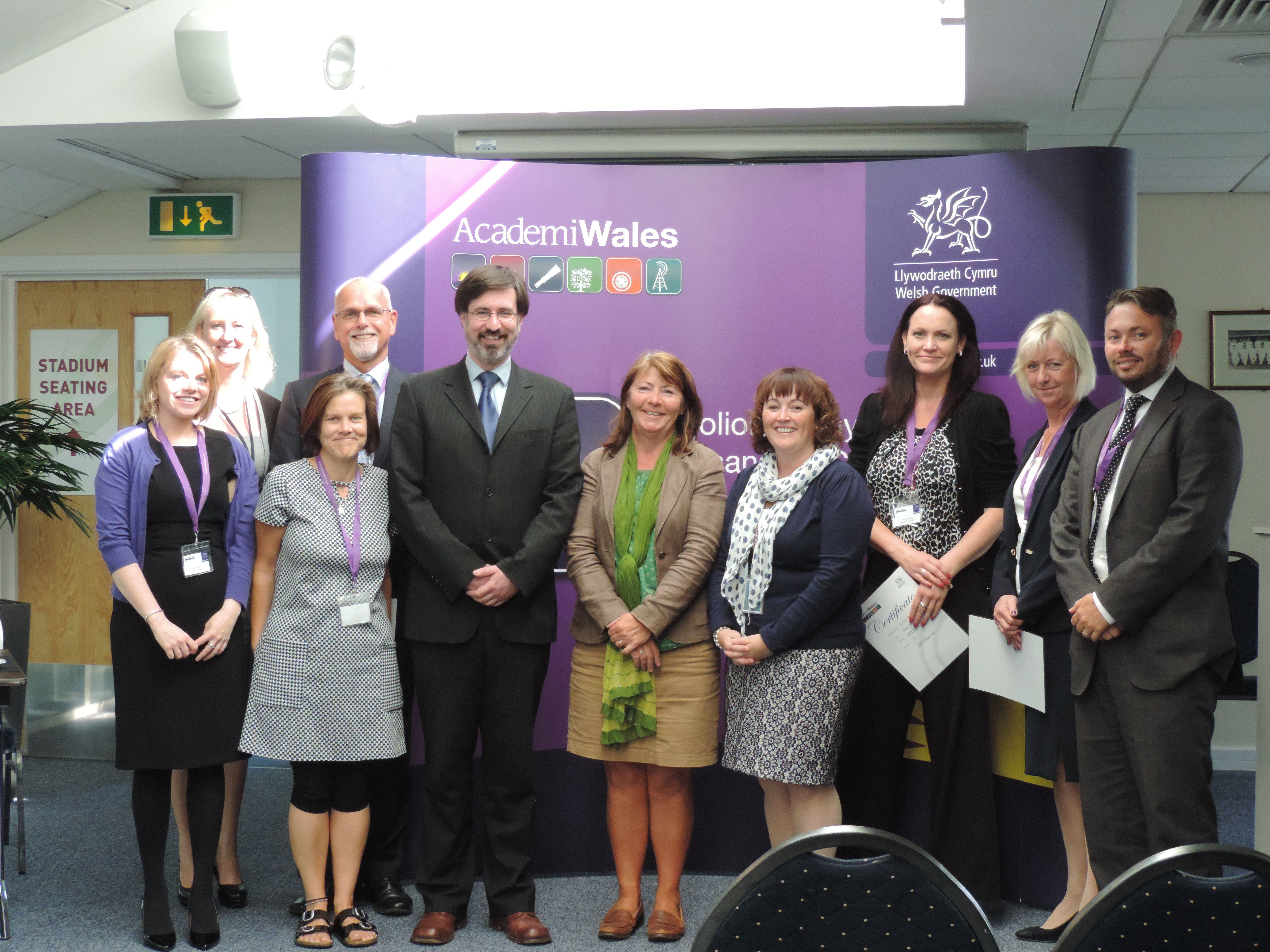
    On Monday I was in Cardiff for a celebratory lunch, hosted by Academi Wales, to recognise the achievement of graduates from the PgCert Public Services Governance programme. Below is a copy of my talk:


    Public Services Governance – Graduation

    Thank you to Academi Wales for inviting me to give this short talk. It’s great to be in Cardiff again and once again the sun is shining. And what a terrific venue for this celebratory lunch. It really is wonderful to see you all again. You should be really proud of what you have all achieved – seriously, well done!

    I have been asked to give a short talk on how the partnership was established, how students progressed through the programme and then finish by discussing what happens next.

    When I started to think about this talk and what I would say one thing came to my mind immediately – that the more things change the more they stay the same.

    On 19th September it looks increasingly likely that the UK Government will be entering into negotiations with the Scottish Government about the progress of establishing an independent Scotland. This may seem like a revolutionary moment. Yet many things will remain the same. The EU will still exist, the UN, the World Bank and the global money markets. And the Scottish Government and rest of UK Government will continue to operate within this global context.

    But of course there will be some change. And it is at times of change that I believe the need for good governance becomes even more critical.

    I feel that Academi Wales have shown great foresight, and indeed courage, in investing in public service workers from across Wales to undertake this programme. And you are very fortunate to have had that opportunity.

    It was back in July 2012 that I got the first call from Academi Wales that they were interested in sponsoring some students on the programme. Following that a value for money exercise was conducted from which we were, I believe, 3rd out of a possible 90 suppliers. But more than that, Academi Wales felt that our programme, the first of its kind in the UK, was the most contemporary and relevant to public services workers in Wales.

    So in December that year I came to Cardiff to the Welsh Government offices where we, along with Prof Catherine Farrell from the then University of Glamorgan, jointly discussed and agreed the detailed structure and content of the programme. This was to include four modules: public services governance themes and issues, public finance, leading change and internal communications. These were seen to be most relevant to those working in a post-Williams Review Wales.

    Then, in April 2013, I came to deliver the two days of module delivery on the first module. On meeting the students I was immediately struck by their enthusiasm and commitment to the programme. That said I can’t say I was surprised, as we’ve always had excellent students on our public services programmes. This is, more than anything, what makes my job so worthwhile. Sharing ideas and practice with experienced and skilled public service workers. It really is an absolute joy.

    Since then the university have established a new masters level programme in public services leadership. This programme draws on many of the aspects of governance within the PgCert but with a focus on coaching as a form of leadership. It is a collaborative programme with City of Edinburgh Council, Dundee City Council and Orkney Islands Council and we currently have over 50 students on this programme. Unfortunately Academi Wales are no longer in a position to support any bursaries, due to budget cuts, but students should continue to nurture the relationships that were established in this programme and build new relationships with students and graduates from all of our public services programmes.

    I would like to thank Paula James and Jo Carruthers from Academi Wales, Prof Catherine Farrell from University of South Wales, and my colleagues from QMU for having made this programme work. But most of all I would like to thank you, the former students, for having made this such a positive and fulfilling experience for me.

    Much of the nature of education is about change. It’s about personal change. About challenging your own assumptions and values. About challenging your practice. You may indeed feel that at the end of this programme you’re a different person. Now you are entering a new beginning. Having successfully completed the programme it is now up to you to implement what you have learned and apply those critical thinking skills to inform your practice: to deliver better governance and delivery of public services in Wales.

    But I would also like to remind you that some things won’t change. First and foremost you will always be part of the QMU family. This doesn’t just mean that you’ll get mail from time to time asking you to donate to the university. But you will also get mail from me asking for your views on governance and public services. Your views still matter. At the same time I will still be there. I and the other academics from the public services programmes will always be available to continue sharing ideas and learning. That does not stop just because you have graduated. The learning continues.

    I would encourage you all to maintain and continue to build the relationships that have been built as a result of this programme. Continue to share ideas and learn from each other. Whatever changes the future brings the need for good governance remains constant. As a graduate of this programme you are ideally suited to meet those challenges. I will continue to provide any support I can and will continue to work with Academi Wales and Prof Catherine Farrell as they see fit. I wish you all the very best.

    Thank you.


    Graduates and staff
    Graduates and staff
  • Using Social Media in Learning and Teaching

    I was invited to give a presentation at University of the West of Scotland at their Student Experience Learning and Teaching (SELT) event on 2 April 2014. You can see all presentations via the Storify which is linked below.


    The topic I was given to present on was ‘Use of Social Media in Learning and Teaching at Queen Margaret University’. In this I drew on my own experiences of using social media within my learning and teaching practice. You can view a video of my presentation here:


    I was delighted, on the very next day, to receive an ‘Innovative Teaching’ award at the QMU Student, Teaching and Representation (STaR) awards. This award was, in part, in recognition of my use of social media. More information on this is available here: STaR Awards.

  • Why I don’t like email

    Please don’t email me

    Every semester when I start my undergraduate teaching I begin by setting the ground rules. Things like the importance of attendance, the need for extensive reading and so on. All what I would expect is fairly standard stuff. However, one area where I seem to differ from many academics is in my approach to student support. I tell all my undergraduate students not to email me.

    This may seem unsupportive. I should stress that at the same time as telling students that they should not email me I do explain why and I also explain the variety of other ways they can and will receive support with their studies. However, this message can sometimes get lost. Given the increasingly consumerist nature of students and marketisation of higher education I thought it would be helpful to provide a blog post explaining my position on this issue.

    The following provides a detailed list of my objections to email as well as touching on the other ways I provide support to my undergraduate students.

    1. Email is distant

    Email is an impersonal and distant mode of communication. This does have some advantages, for example with distance learning students. However, I see my full-time undergraduate students at least twice a week – once in lectures and once in seminars. The use of email can create a sense of distance where, in my view, it should not exist. Consequently I tell all my undergraduate students that, rather than send an email, they should rise any questions they have in class.

    Now there is an important exception to this rule. I do think there is a need for use of email with postgraduate students, many of whom are either studying part-time or by distance learning, and so do not have the weekly contact that full-time undergraduate students have. It is also fair to say that email contact is useful outside term time for all students.

    2. Email is individual and hidden

    Students who receive significant advice or support from lecturers via email communication can, in effect, have an unfair advantage over those who do not receive this information. Rather than responding to individual students by email I devote the first 10 mins of class to an open Q&A session. This allows me to relay answers to all students at the same time – thereby eliminating any favoritism or the likelihood of receiving several separate emails on the same topic. Where any questions relate to assignments I make sure to upload the question and reply to our university Virtual Learning Environment in the form of FAQs so that all students can see the reply – and these FAQs are copied over into future years.

    3. It takes seconds to send and minutes to reply

    Sending email is very easy for the sender. It can take seconds to write an open-ended question such as “I am having difficulty understanding the distinction between concept x and concept y. Could you please tell me how these two concepts relate to the theory of z“.

    That may be a very good question. But while it might take seconds to send, replying is likely to take some minutes. As a result we can find much of our time filled up with what many refer to as “dealing with email”. Alternatively, answering such a question in class is likely to take less time and importantly can stimulate a greater discussion among the students and so support their peer-to-peer learning.

    4. Clog up inboxes

    The desire to be inclusive when using email often leads to sending one email to multiple recipients. From one email you can then receive multiple replies which can very quickly help fill up an inbox. Alternatively using discussion forums or social media will also encourage replies but without the limitations of the email inbox.
    Email, sucks.

    Source: Kristiewells (available here: http://www.flickr.com/photos/kristiewells/6022279419/)

    Ultimately email inboxes are never big enough. No matter where you work you will undoubtedly have, at some point in your career, reached a point where your inbox is full. This can block other emails from getting to you. As such it is best to encourage less use of email – as well as proper management of your inbox (which I must confess I don’t always do).

    5. Lack of tone or inflection.

    Part of the difficulty in replying to email is the lack of tone or inflection that is possible. In effect this means that we can spend significantly more time drafting an email in order to fully explain what it is we are trying to say than would be possible verbally. There is also the risk that students who write emails, potentially in the heat of the moment, send something which does not entirely reflect their particular concern(s). This can lead to an answer that does not entirely address their concerns – and so lead to follow-up questions and further email exchanges.

    6. Email as a weapon.

    There is also a sense that some people may use email in order to receive a written response with the intent that this can be used as “evidence” later. This places even greater onus on us to carefully craft emails. The excessive use of email in this way is also an indication of a lack of trust which should be resisted at every opportunity.

    7. Computer security

    Recently my personal email account was hacked. All my contacts were sent an email, seemingly from me, with a link which (I assume) was linked to a virus. This highlighted for me the inherent insecure nature of email compared with verbal communication. Social media is not immune to such attacks either and so again verbal communication can be preferable.

    8. Casual formality

    Emails have the immediacy of a tweet or a text but retain an inherent degree of formality more akin to letters. This makes it difficult to judge what is an appropriate tone. The immediacy of email also contributes to assumptions that all emails will receive a response – and an almost immediate response. In this sense social media can be easier to use as these platforms do not tend to have the pretense of formality that is often associated with email and responses are limited to (in the case of Twitter) 140 characters.

    9. Antisocial

    There is no substitute for face-to-face contact. At the same time there isn’t enough time in the day to meet with all students separately and so some ‘distance’ support is important. But in my view email is, among all alternatives, one of the worst forms of communication method. Again the closed and impersonal nature of email makes it, in my view, a deeply flawed communication method. In comparison many social media tools, such as Twitter, are open to all and so can stimulate a wider discussion and debate. In that sense I think the use of Twitter is actually better than email. It is also important for lecturers to have regular open office hours where students can simply pop in without having to set up a meeting (something which again usually requires email).

    10. The idea that email equals support

    Some academics may feel that being available (virtually) to all students 24/7 demonstrates a commitment to student support. But the impersonal and distant nature of email, combined by the lack of inflection or tone, can mean that important context can be missed. It may be that what the student is asking about is a symptom of a greater problem which would be raised through a face-to-face discussion. It is also important to stress on students the importance of attendance and that email correspondence combined with engagement with the Virtual Learning Environment does not represent a substitute for face-to-face contact. Finally it is important, in my view, to encourage students to be independent learners who have the confidence and aptitude to find information for themselves.

    Final thoughts

    Now all of the above is also qualified by the fact that when an emergency arises which cannot wait until the next class then of course students still can use email. It should not however be the default option for any and all queries. It is important that lecturers provide clear and full (and up-to-date) information to students via module handbooks and Virtual Learning Environments. These sources should help to eliminate the need for students to revert to email communications. Lecturers should also be available at the start and end of classes to address any ongoing concerns and to have regular office hours where students can ‘pop-in’. In my view the use of email is no substitute for these methods of support.

    So if you are an undergraduate in one of my classes please note that you will find all relevant information about the module and assignment via the Virtual Learning Environment. Important information will be reinforced in classes. There will also be an opportunity at the start of every class to ask any questions you may have. But unless for an emergency please do not email me.

  • Twitter and Student Engagement

    Yesterday I had one of those experiences that remind me why I love my job. I met a group of academics from King Saud University, one of the world’s top universities. I had been asked to speak about the use of Twitter as a way to promote student engagement. The response was really terrific. Lots of debate was stimulated and my session ended up going well beyond the 20 minute time allocation – and could have easily continued for considerably longer.

    It was encouraging to see so much enthusiasm for learning and teaching and so much interest in the use of Twitter as a possible way to enhance student engagement.

    The key point from my presentation was that Twitter is a tool that offers a lot of potential in promoting student engagement. This is particularly so beyond formal class time. It is not, in my view, an alternative to formal class time. Student attendance and participation during formal class time is still critical to the learning experience. I also think that academics have a duty of care to students which can only be assured through regular contact. However, Twitter, and other social media, offers a valuable way to engage with students beyond formal class time.   

    Anyway, here is a copy of my slides on the topic. Particular thanks to Anna Evely (@AnnaEvely); Stuart Hepburn (@stuart_hepburn); the LSE Impact Blog (@LSEImpactBlog); Anthony McNeill (@anthonymcneill); and Mark Reed (@lecmsr) for some useful sources which are listed at the end of the presentation.

  • What is Blended Learning?

    This vlog post is all about how I use blended learning in the delivery of my postgraduate teaching. I had intended the video to last 5 minutes but turns out to be closer to 10 minutes. Anyway, here it is…

  • The perils of social media

    Previously I have blogged about why PhD students should use Twitter.

    This post has been motivated by a great post on spelling and grammar by Peter Matthews.

    One of the common criticisms of social media is that it encourages, or at least tolerates, poor spelling and grammar. As such universities should steer students away from participation in social networking.

    Another criticism is that by promoting the use of social media academics are potentially opening themselves, and their universities, to negative publicity.

    The first thing to recognise is that social media is inherently social. In social settings we may all adopt a more casual form of language. So I don’t think we should be too strict about spelling and grammar on Twitter or Facebook.

    The issue for me is where the rather lax rules of social language are applied in inappropriate settings such as a formal letter, email or student essay.

    In terms of organisational risk I can’t help but think that this is to miss the point. Social media is out there. And surely there is more to lose by sticking your head in the sand.

    So we should be actively encouraging students to use social media more-and we should support them to use it better.

  • Why You Should Tweet!

    1. Share
      I will #livetweet on use of twitter in research next Wed at 1215. Using #phdtweet. Please join in. More info to follow. #highered #loveHE
      Fri, Apr 20 2012 05:03:39
    2. Share

      Fri, Apr 27 2012 08:24:29
    3. My initial tweet on the subject attracted a lot of interest and was RT’d several times including by Guardian Higher Education.
    4. Share
      RT @ian_c_elliott: I will #livetweet on use of twitter in research next Wed at 1215. Using #phdtweet. Please join in. More info to follow. #highered #loveHE
      Fri, Apr 20 2012 05:25:18
    5. Share
      Thanks to everyone for your interest in the #livetweet #phdtweet event and for your RTs. More to follow next week. #LoveHE #highered
      Fri, Apr 20 2012 07:58:43
    6. In advance of the presentation I posed a few questions so that others could participate in the discussion. Tweets using the #phdtweet were displayed live on screen during my presentation. The questions and a few interesting responses are listed below.
    7. Share
      #phdtweet Q1. How has twitter helped you with literature searching?
      Mon, Apr 23 2012 06:51:11
    8. Share
      @ian_c_elliott Continually distracted me. Occasionally led to something useful. Allowed me to stalk favoured writers.
      Mon, Apr 23 2012 07:55:28
    9. Share
      @ian_c_elliott I’d say it’s helped me make contacts that have led me to new literatures #phdtweets e.g. @DrDaveOBrien & @Localopolis
      Mon, Apr 23 2012 09:26:57
    10. Share
      @ian_c_elliott I search for and collect tweets relevant to my case studies – many politicians and all public agencies tweet #phdtweet
      Mon, Apr 23 2012 09:39:33
    11. Share
      #phdtweet Q2. Has anyone used twitter to help with data collection? #highered #LoveHE
      Mon, Apr 23 2012 09:56:51
    12. Share
      @ian_c_elliott I’ve sourced many participants from twitter – general (members of the public etc.) & specific (certain professions etc.).
      Mon, Apr 23 2012 10:00:50
    13. Share
      #phdtweet Q3. How can twitter help with dissemination of research findings? #highered #LoveHE
      Mon, Apr 23 2012 10:39:00
    14. Share
      @ian_c_elliott absolutely brilliant for dissemination. Got twice as many hits as avg. for: http://bit.ly/II0iiS thanks to @amcunningham
      Mon, Apr 23 2012 10:54:41
    15. Share
      @ian_c_elliott re Q3 #phdtweet @QMUeResearch tweets automatically when new papers are put into it. A small thing, but hopefully helpful.
      Mon, Apr 23 2012 11:32:02
    16. Share
      #phdtweet Q4. How can twitter help with career development for early career academics?
      Wed, Apr 25 2012 03:38:32
    17. Share
      @ian_c_elliott Q4 opens up so many opportunities to work w/ those outside your uni, good way to learn about how unis “work” too #phdtweet
      Tue, Apr 24 2012 10:22:36
    18. Share
      @ian_c_elliott gave confidence to even consider doing PhD, &in response to other q, you can see beyond yr immediate surrounding #phdtweet
      Tue, Apr 24 2012 10:26:21
    19. Share
      #phdtweet Tweeting can help find co-authors & perhaps lead to an award-winning paper: http://bit.ly/f6FFI6
      Wed, Apr 25 2012 07:15:00
    20. The presentation was to be recorded for iTunesU but unfortunately technical problems meant that the recording did not work. However my slides are available here: http://storify.com/ian_c_elliott/why-you-should-tweet
    21. During the presentation lots more suggestions were made as to how Twitter can help with the development and dissemination of research such as this tweet from Brian Kelly:
    22. Share
      #phdtweet A tweet can take you to Catalonia! http://bit.ly/dNQlmW
      Wed, Apr 25 2012 07:30:03
    23. As well as the fairly instrumentalist rationale set out in the main body of my presentation I also highlighted what I believe to be the moral case for use of social media by academic researchers.Queen Margaret University was founded with the aim of extending educational opportunities – specifically to women who in Victorian Britain were excluded from Higher Education. Today social justice remains a key part of what we do. In addition, the creation and sharing of knowledge is ultimately what academia is all about.

      Twitter, and social media in general, provides new ways to both create and share knowledge. As such we should all consider how these new tools can help. I really like the following blog post from Brian Kelly on this subject:

    24. Share
      #phdtweet Do you want to observe the world or change it? If the latter, Twitter can help: http://bit.ly/IkDp6J
      Wed, Apr 25 2012 09:00:11
    25. Following my presentation there were a number of questions including how to reference a Tweet and the discussion continued through the afternoon.
    26. Share
      hears question on referencing tweets. Yes it can be done – just another source of information #phdtweet
      Wed, Apr 25 2012 08:01:22
    27. Share
      @ian_c_elliott @QMULRC Doesn’t a reference need to provide info that allows validation (e.g. a link)? or doesn’t this matter with tweets?
      Wed, Apr 25 2012 08:48:03
    28. Share
      @Localopolis @QMULRC useful guide available here: http://www.mla.org/style/handbook_faq/cite_a_tweet
      Wed, Apr 25 2012 08:39:04
    29. I believe there are great benefits to PhD students in engaging with Twitter. I would recommend that you get an account and, as a starting point, search for the #PhDchat. You will find it easy to make contact with other PhD students and academics.
    30. Share
      @qui_oui yes, #PhDchat is a really good resource. I would highly recommend it to all PhD students. #phdtweet
      Fri, Apr 27 2012 09:41:55
    31. A lot of people have asked if there will be another #livetweet event – perhaps one focused on use of Twitter for learning and teaching activities. This is something I would certainly be interested in facilitating if there is sufficient interest.Watch this space!