I’ve not been blogging much of late due to a number of other priorities around marking, teaching prep, research writing and conference attendance. In amongst all of that I’ve had three lovely weeks off at the start of August. For many people the summer holidays are a time to catch up with some reading. For me this largely involves Julia Donaldson books. But recently I discovered a new favourite – Yertle the Turtle by Dr Seuss. Here is why it should be required reading in every Business School.
Yertle the Turtle is a story about a King Turtle, called Yertle, who becomes increasingly power hungry. Not satisfied with his status as King of the pond he requires his subjects to work harder in order to extend his realm. As his status rises so the burden of those below him also increases to the point where they are in great pain and hunger. Yet as Yertle continues to rise high into the clouds his link with those below him becomes ever weaker and ultimately his hubris leads to his demise. It is a fantastic story (available to purchase here: http://www.amazon.co.uk/dp/0007173148).
This is a children’s book. Like other children’s books the focus is on fair play and the importance of sharing. We constantly tell our children to play nice, to respect others, to always say please and thank-you. When do we think this should stop?
At some point our childhood learning is dismissed and replaced by mechanisms of management and governance that both enable and actively encourage individualised efforts and game playing. Team-work and shared goals are shunned and often the vision of ‘great man’ leadership is espoused. Even within education group-work for students is often avoided, especially assessed group-work, due to the problems associated with perceived ‘free-riders’. In research sole-authored academic papers are (at least in social sciences) considered superior to co-authored works. In many organisations promotion and reward criteria are often based on individual efforts and evidence of individual impact. Across corporations, and increasingly the public and Third Sectors, this mantra is reflected in the rise of CEO pay packets whilst at the same time tax avoidance and pay restraint for other employees are seen as common and accepted business practice.
Should Yertle be seen as the villain of the piece or someone to admire – ambitious, assertive and driven? Do we lose something by failing to recognise the value of sharing and team-work in business and management? Or should we tell our children different – to look after number one, that greed is good, to be ruthless in their negotiations and never trust anyone? Would that help them face the realities of life or, dare I say, improve their employability?
Should we teach our children different – or is it us who could do with a lesson?
For another example of the stories we tell see this episode of Peppa Pig in relation to debates around Brexit:
In order to gain some first hand experience of this programme – and to develop my own professional practice – I took part in a leadership exchange over the last six months. The following is offered as a reflection on my participation.
I was paired with Andy Dey, Operations and Development Manager at ACOSVO. The purpose of our exchange was largely to explore the links between our two organisations and, for me, to get experience of the Leadership Exchange prior to it becoming a core part of our new MPA programme. This last point was important as I wanted to make sure I had a concrete understanding of the process before advising our new students. But equally the former purpose was necessary so that we could scope out together how our two very different organisations would work together in supporting students on the MPA.
The first thing to note about my particular exchange was that, as exchange partners, we could not be more different in our backgrounds and experience. Andy has experience at a senior level in the military (RAF/Air Commodore) and third sectors, including the running of multi-million pound, multinational organisations. I am an academic (albeit I do work in the real world!).
This difference was not a barrier to learning. In fact, I would argue that having people working together from different organisations and backgrounds is an enabler of learning. What is important for learning to take place is that both parties are open to the opportunity and are willing to challenge and question their own practices, values and beliefs. In doing so it’s important that both parties in the exchange respect the others’ perspective. I’m reminded of my favourite Rabbie Burns poem, To a Louse,
O wad some Power the giftie gie us To see oursels as ithers see us! It wad frae mony a blunder free us, An’ foolish notion: What airs in dress an’ gait wad lea’e us, An’ ev’n devotion!
With any learning or development opportunity it’s important that those engaged in the process enter into it with the right mindset. If one party approaches any learning opportunity thinking ‘I know best’ then realistically there won’t be much learning!
So whilst the exchange partners may come from different backgrounds and experiences it is important that they share a common purpose. Thus the first stage in the ACOSVO leadership exchange process, filling out the application form, includes questions such as:
What are your areas of experience and knowledge which might be of interest for an exchange partner?
What topics would you like to explore during your exchange?
What would you like to gain from a Leadership Exchange
Within our MPA programme we are extending this by requiring students to complete a Tripartite Agreement between the university, their exchange partner and themselves. This will detail their anticipated learning outcomes from the exchange and the types of activities that they will be involved in to achieve these outcomes.
Within my exchange the key outcomes were clear and were shared between myself and my exchange partner so that the experience was a positive one. We met a number of times at both ACOSVO and at the university. I was able to sit in on an ACOSVO board meeting and Andy contributed to one of our Collaborations Operations Group (COG) meetings. As well as our meetings we had regular email communications. Again, communication is important for any learning experience to work – not to mention partnership working.
For our MPA students there will be a requirement that they attend four campus-based sessions about the workplace learning element of the programme. For those going through the leadership exchange there is a requirement that 24 hours of ‘contact time’ be used within the Leadership Exchange itself. This might equate to six half day (4 hour) sessions or three full day (8 hours) sessions. Again there needs to be this level of commitment and engagement in order to get the most out of it – particularly when benchmarked against Master’s level learning outcomes.
But what did I get out of it? A greater appreciation of the great work done within the Third Sector; positive affirmation that what we do as a university in terms of governance and quality assurance is of a very high standard; and contact with a hugely experienced Third Sector leader – who also happens to be a great guest speaker! But most of all I would say that my experience on the leadership exchange made me realise just how great the idea of leadership exchange is – and the case studies from others who have taken part testify to the value of this programme.
I would recommend the ACOSVO Leadership Exchange programme to anyone who genuinely wants to develop their professional practice. I’m delighted that at least one of my colleagues from the senior management team at QMU has embarked on a leadership exchange having heard about my experience – hopefully others will follow. Moreover I know that the MPA programme will be a terrific learning experience for all involved and I can’t wait to get started in September!
Applications for our new MPA, in partnership with ACOSVO, are now open. Click here to apply.
NB: This was originally posted in 2016. As of September 2018 I no longer work at Queen Margaret University. As such some of the links on the below post may no longer work. For information about my current post please go to the About Me section of this website.
What on earth is an MPA? Is that similar to an MBA? Why would anyone want to do an MPA? These are just some of the questions we have been asked when speaking to public service professionals about the development of the MPA at Queen Margaret University.
So what is an MPA? Well, to start with, it is a Master of Public Administration. In other words, it’s the public sector equivalent of a Master of Business Administration (MBA).
In that case presumably it must be similar to an MBA? Well, yes and no. The MPA and MBA are what are known as Type 3 master’s programmes – in other words, post-experience master’s. Entrants to this type of programme would typically have at least two years experience. In this sense the MBA and MPA are similar – both are typically post-experience master’s programmes. But the MPA programme may be of interest to anyone motivated by public service rather than commerce.
But is the content of an MPA similar to an MBA? This is where things start to get more complicated. There is no single set curriculum for MPA programmes. As a result some (though not all) MPA programmes have content that is very similar to what you would find on an MBA. Modules can include things like strategic management in the public sector; human resource management in the public sector; financial management in the public sector and so on. In other words, an MBA with a public sector slant.
So why would anyone want to do an MPA? Increasingly there is a recognition that private sector management techniques do not always translate into public service environments. Different skillsets and different perspectives are needed to transform public services. Those with professional experience will likely have significant management skills already. Studying an MPA, as opposed to an MBA, can help develop new skills and new perspectives.
The QMU MPA in Edinburgh is structured around a philosophy of transformational change. In designing the curriculum our starting point was to consider what makes public services distinctive – their central role in promoting social justice and equality. Modules include ‘Gender and Equality’ alongside ‘International Trends in Public Administration’ and ‘Leading Change in Public Services’. Rather than reflect public services, the State and society, this MPA programme aims to shape the public service landscape of tomorrow.
If that is something you can relate to then this might just be the MPA for you. Further information is available in this programme leaflet or at our website. For more information contact the MPA Director, Dr Ian C Elliott: ielliott@qmu.ac.uk.
Dr Ian C Elliott, Senior Lecturer in Business & Public Services, QMU Edinburgh.
Susanne Ross, Lecturer in Business & Public Services, QMU Edinburgh.
Dr Peter Falconer, Reader in Public Services Management, QMU Edinburgh.
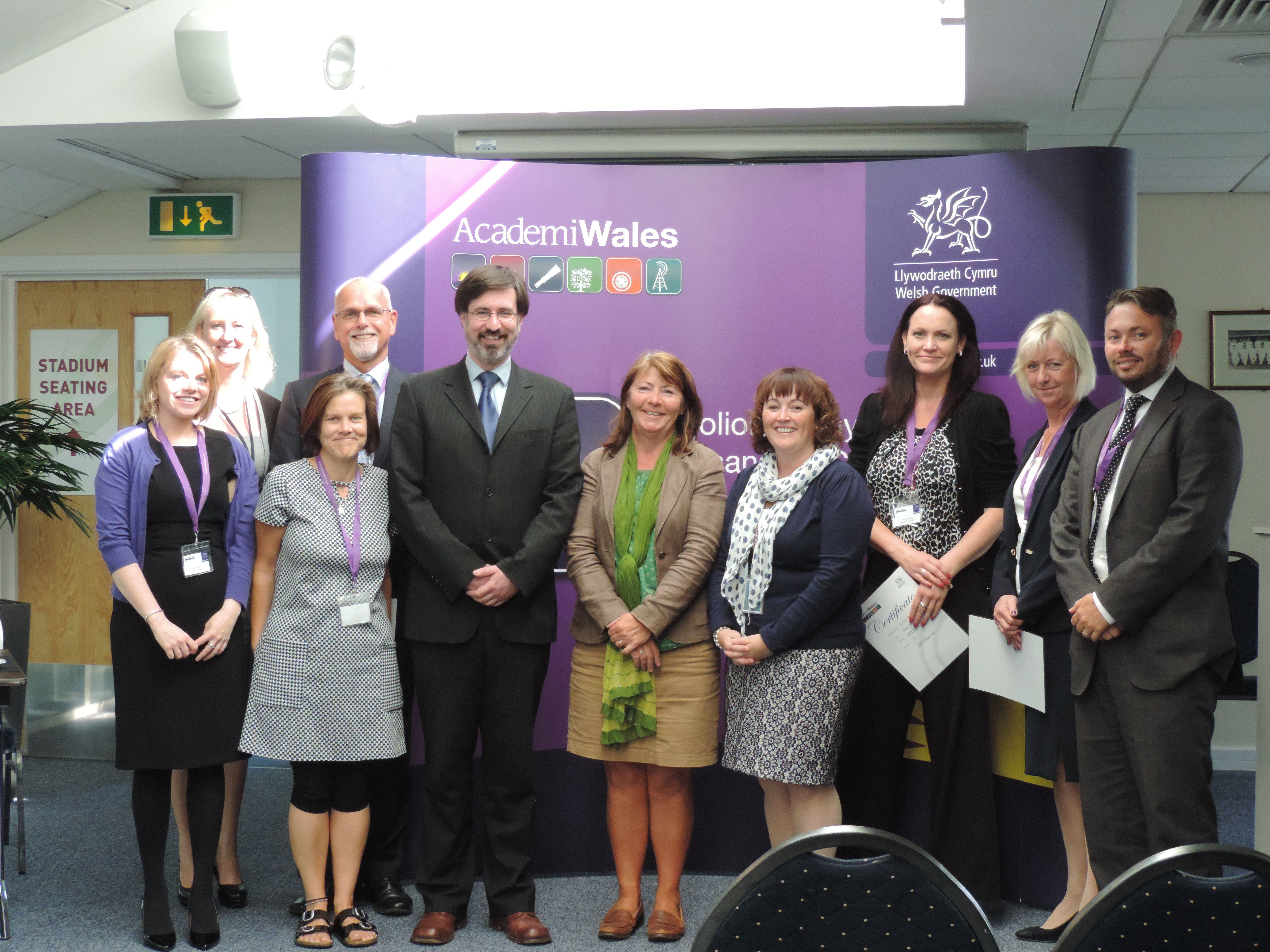
On Monday I was in Cardiff for a celebratory lunch, hosted by Academi Wales, to recognise the achievement of graduates from the PgCert Public Services Governance programme. Below is a copy of my talk:
Public Services Governance – Graduation
Thank you to Academi Wales for inviting me to give this short talk. It’s great to be in Cardiff again and once again the sun is shining. And what a terrific venue for this celebratory lunch. It really is wonderful to see you all again. You should be really proud of what you have all achieved – seriously, well done!
I have been asked to give a short talk on how the partnership was established, how students progressed through the programme and then finish by discussing what happens next.
When I started to think about this talk and what I would say one thing came to my mind immediately – that the more things change the more they stay the same.
On 19th September it looks increasingly likely that the UK Government will be entering into negotiations with the Scottish Government about the progress of establishing an independent Scotland. This may seem like a revolutionary moment. Yet many things will remain the same. The EU will still exist, the UN, the World Bank and the global money markets. And the Scottish Government and rest of UK Government will continue to operate within this global context.
But of course there will be some change. And it is at times of change that I believe the need for good governance becomes even more critical.
I feel that Academi Wales have shown great foresight, and indeed courage, in investing in public service workers from across Wales to undertake this programme. And you are very fortunate to have had that opportunity.
It was back in July 2012 that I got the first call from Academi Wales that they were interested in sponsoring some students on the programme. Following that a value for money exercise was conducted from which we were, I believe, 3rd out of a possible 90 suppliers. But more than that, Academi Wales felt that our programme, the first of its kind in the UK, was the most contemporary and relevant to public services workers in Wales.
So in December that year I came to Cardiff to the Welsh Government offices where we, along with Prof Catherine Farrell from the then University of Glamorgan, jointly discussed and agreed the detailed structure and content of the programme. This was to include four modules: public services governance themes and issues, public finance, leading change and internal communications. These were seen to be most relevant to those working in a post-Williams Review Wales.
Then, in April 2013, I came to deliver the two days of module delivery on the first module. On meeting the students I was immediately struck by their enthusiasm and commitment to the programme. That said I can’t say I was surprised, as we’ve always had excellent students on our public services programmes. This is, more than anything, what makes my job so worthwhile. Sharing ideas and practice with experienced and skilled public service workers. It really is an absolute joy.
Since then the university have established a new masters level programme in public services leadership. This programme draws on many of the aspects of governance within the PgCert but with a focus on coaching as a form of leadership. It is a collaborative programme with City of Edinburgh Council, Dundee City Council and Orkney Islands Council and we currently have over 50 students on this programme. Unfortunately Academi Wales are no longer in a position to support any bursaries, due to budget cuts, but students should continue to nurture the relationships that were established in this programme and build new relationships with students and graduates from all of our public services programmes.
I would like to thank Paula James and Jo Carruthers from Academi Wales, Prof Catherine Farrell from University of South Wales, and my colleagues from QMU for having made this programme work. But most of all I would like to thank you, the former students, for having made this such a positive and fulfilling experience for me.
Much of the nature of education is about change. It’s about personal change. About challenging your own assumptions and values. About challenging your practice. You may indeed feel that at the end of this programme you’re a different person. Now you are entering a new beginning. Having successfully completed the programme it is now up to you to implement what you have learned and apply those critical thinking skills to inform your practice: to deliver better governance and delivery of public services in Wales.
But I would also like to remind you that some things won’t change. First and foremost you will always be part of the QMU family. This doesn’t just mean that you’ll get mail from time to time asking you to donate to the university. But you will also get mail from me asking for your views on governance and public services. Your views still matter. At the same time I will still be there. I and the other academics from the public services programmes will always be available to continue sharing ideas and learning. That does not stop just because you have graduated. The learning continues.
I would encourage you all to maintain and continue to build the relationships that have been built as a result of this programme. Continue to share ideas and learn from each other. Whatever changes the future brings the need for good governance remains constant. As a graduate of this programme you are ideally suited to meet those challenges. I will continue to provide any support I can and will continue to work with Academi Wales and Prof Catherine Farrell as they see fit. I wish you all the very best.
I was invited to give a presentation at University of the West of Scotland at their Student Experience Learning and Teaching (SELT) event on 2 April 2014. You can see all presentations via the Storify which is linked below.
The topic I was given to present on was ‘Use of Social Media in Learning and Teaching at Queen Margaret University’. In this I drew on my own experiences of using social media within my learning and teaching practice. You can view a video of my presentation here:
I was delighted, on the very next day, to receive an ‘Innovative Teaching’ award at the QMU Student, Teaching and Representation (STaR) awards. This award was, in part, in recognition of my use of social media. More information on this is available here: STaR Awards.
In a previous post I highlighted some of the challenges that are inherent in managing public services due to the nature of being ‘public’. However, there are also challenges that come with managing a ‘service’. These challenges apply across private and public services, and whether delivered by public, private or Third sectors.
These issues are quite important to recognise for all managers given the continuing rise of the service sector across the world. In fact services account for 62.9% of global GDP.
The key characteristics of services are intangible, heterogeneous, inseparable, and perishable as defined by Zeithaml, Parasuraman and Berry 1990 (although some, notably Lovelock and Gummesson, 2004, have questioned this classification).
Intangibility
Services are largely intangible. They are about having an experience. Of course there are some physical characteristics associated with most services, such as the quality of chairs in a fine dining restaurant, but what makes services unique from goods is the extent to which perceptions of service quality are impacted by environmental factors and customer-provider interactions. These intangible factors are very difficult to control or manage.
Take, for example, a business offering guided bus tours of the Scottish highlands. There are a number of physical features of this service such as the comfort of the seats on the bus. But ultimately much of the service experience will be influenced by factors entirely outside of the control of the business – weather, the interaction with staff, the behaviour of other customers on the bus (to name but a few). These intangible factors make service interactions very unpredictable and difficult to control.
Creative Commons license: by Pedro Szekely
Perishability
The fact that services are intangible also means that they are not easily stored for future use. So if there is excess capacity this cannot be stored to be sold at another time. In other words, services are perishable.
Take, for example, a street performer. If they do not attract a significant audience for their performance that equates to lost income. They cannot get that time back. Hence the pressure within many services to get ‘bums on seats’. Consequently, pricing is key – particularly with services that have high fixed costs and a fixed capacity such as with cinemas, restaurants and bus tour companies.
Creative Commons license: by Trey Ratcliff
Inseparability of production and consumption
Most services are produced at the same time as they are consumed. So the street performance will be consumed at the same time as it is ‘produced’. This means that quality control is much more difficult than with goods. It also places significant pressure of service staff to always ‘perform’ at a consistent level. This requirement of service workers to perform is best described by the Hochschild (1983) concept of emotional labour. Numerous studies have shown that the strain of constantly having to perform can lead to stress-related illnesses. This blogpost by Flip Chart Fairy Tales highlights a number of other reasons why people in service occupations tend to have more sickness absence that in other occupations.
As an example of the inseparability of production and consumption take transplant surgery. The medical staff must perform consistently under the most extreme pressure with every single patient. Mistakes can cost lives and, unlike with manufacturing, are often not easily rectified. Yet quality inspection and control can only happen at the same time that the ‘customer’ is receiving the service. Furthermore the speed of service delivery is critical. Under these circumstances it is truly impressive what our health workers do on a daily basis. Hence those who use a service, such as the NHS are likely to be more satisfied with the service than those who do not as outlined in this Ipsos Mori report.
Creative Commons license: by Army Medicine
Heterogeneity
The intangibility and the fact that production and consumption take place at the same time means that the service provided may be slightly different every time. This has significant advantages in terms of customisation and innovation. But it is also costly and can lead to dissatisfaction if a minimum service level is not met.
So a service experience, like a rock concert, may be different every time. Take for example Bruce Springstein’s recent Hyde Park gig where he sung the song, Take Em As They Come, especially for one of his fans in the crowd. The flexibility of many services allows for this sort of innovation and customisation. However, this may be experienced by different people in different ways – even at the same time. The need for some control is also highlighted by the fact that the same Hyde Park gig ran over time to such an extent the organisers were forced to turn off the speakers in order to comply with the terms of their licence.
Nonetheless, the more a service is standardised (which improves efficiency) the less personalisation can be achieved (potentially affecting effectiveness). Imagine if a barber gave every customer the same hair cut. It might be very cheap and efficient but would almost certainly affect customer satisfaction. Given the increasing focus on efficiency over effectiveness it is perhaps not surprising that public attitudes towards the NHS are falling.
Creative Commons license: by Christian Holmér
Conclusion
These factors, when taken together, mean that services are very difficult to manage. When you include the publicness of public services, as well as the complex problems many such services have to deal with, it is perhaps not surprising that they are not always perfectly efficient. Indeed it has been pointed out on this excellent set of posts by Flip Chart Fairy Tales (Part 1; Part 2) just how difficult efficiency gains are in service industries.
This is not to say that we shouldn’t even try to create efficiencies – but it might help to start with realistic expectations.
References:
Hochschild, A. (1983) The Managed Heart: Commercialization of Human Feeling. California: University of California Press.
Lovelock, C. and Gummesson, E. (2004) “Whither services marketing?”, Journal of Services Research, Vol. 7 No.1, pp.20-41.
Zeithaml, V.A., Parasuraman, A. and Berry, L.L. (1990) Delivering Quality Service. New York: Free Press.
Public service organisations are highly complex for many reasons. As such it is important that any education or training for public service workers is tailored to the public service context. One particular aspect of this complexity is the nature of the ‘public’ who they serve.
I was (along with others) really sorry when the excellent We Love Local Government blog was brought to a close. This blog was I think exemplary in its content and analysis of all things public service. It will remain a valuable resource to my students on the MPA programme and indeed also my PhD students.
One of my particular favourite posts on the blog was about the three publics. This highlights just one aspect of what it is that makes public services so complex and difficult to manage. What this blog post highlights is that private sector organisations deal with two publics – those who use their product / service and those who don’t but might in the future. However, public sector organisations have to serve the needs of three publics – users, potential future users, and non-users.
‘Private’ services
Take for example a builders. They will be responsible for ensuring that any building work is compliant with building regulations and as a business they must meet other statutory requirements. However, ultimately they are accountable to one public – their customers.
The builders might also offer free estimates for those who might use their service in the future. They might do some other targeted marketing such as putting flyers through doors. So they may engage with another public – those who may use their products / services in the future. But ultimately the builders only have to deal with one public – their customers.
‘Public’ services
In contrast, the public sector have to serve, and are accountable to, three publics. There are those who use the services, those who may use the service in the future, and those who will never use the service. Hence, the three publics. All three publics are important stakeholders and are not limited by voting patterns or payment of taxes. The public sector is there to serve everyone.
What does this mean for managers?
Well, one distinct feature of the public sector is that they cannot choose their customer in the same way that the private sector can.
For example, in the case of the builder, they have autonomy to choose their customer. They may, for example, provide an overly-inflated quote if they do not want or need the business. They may choose to work within a particular geographical area or indeed may choose not to do certain types of work or choose not to work for certain types of people.
This choice has significant benefits. It enables the private sector organisation to specialise in offering a particular type of good or service to a particular type of person. So, M&S will design their stores and select their products based on a very different rationale to say, Lidl. Both are very successful businesses but both are significantly enabled by this ability to discriminate. In particular the ability to discriminate helps to reduce costs by enabling the development of standardised systems which can help reduce errors and system failures.
On the other hand public services are there to serve the entire public. No matter who ‘walks through the door’ they must be served and their needs addressed as best as is possible. This means public service providers need to be highly flexible and adaptable to different user needs. Any attempt to develop standardised systems in public service environments restricts street-level innovation, often does not work and leads to failure demand. See this excellent blog post by Flip Chart Fairy Tales.
Implications for training and development
The need to be flexible and inclusive is difficult and expensive. Imagine, for example, a restaurant that tried to offer both fine dining and budget fast food at the same time – chances are that it wouldn’t work and all three publics would be left unsatisfied. Attempting to meet the needs of all of the people all of the time demands a particular skill set from public service workers. And with increasing change in society comes increasing change in public expectations and so public service requirements. This is why I believe the recent Christie Commission on the Future Delivery of Public Services was right to point to the need for better and more training and development. What is perhaps more questionable is the desire for a “single cross public service development programme” (Christie, 2011: 39) when there is so much variance in development needs.
On a traditional MBA course you would undoubtedly learn about the efficiency savings that can be gained from standardisation and removing variation from your business systems. This mantra fails to take account of the three publics and the complexity of public services. Hence training and development for public service professionals must be context-driven in order to be relevant to their needs. Public service professionals should be involved in the design of such training and development. Most of all, public service providers should not shy away from investment in training and development at a time when service improvements are so sought after.
Yesterday I had one of those experiences that remind me why I love my job. I met a group of academics from King Saud University, one of the world’s top universities. I had been asked to speak about the use of Twitter as a way to promote student engagement. The response was really terrific. Lots of debate was stimulated and my session ended up going well beyond the 20 minute time allocation – and could have easily continued for considerably longer.
It was encouraging to see so much enthusiasm for learning and teaching and so much interest in the use of Twitter as a possible way to enhance student engagement.
The key point from my presentation was that Twitter is a tool that offers a lot of potential in promoting student engagement. This is particularly so beyond formal class time. It is not, in my view, an alternative to formal class time. Student attendance and participation during formal class time is still critical to the learning experience. I also think that academics have a duty of care to students which can only be assured through regular contact. However, Twitter, and other social media, offers a valuable way to engage with students beyond formal class time.
Anyway, here is a copy of my slides on the topic. Particular thanks to Anna Evely (@AnnaEvely); Stuart Hepburn (@stuart_hepburn); the LSE Impact Blog (@LSEImpactBlog); Anthony McNeill (@anthonymcneill); and Mark Reed (@lecmsr) for some useful sources which are listed at the end of the presentation.
This vlog post is all about how I use blended learning in the delivery of my postgraduate teaching. I had intended the video to last 5 minutes but turns out to be closer to 10 minutes. Anyway, here it is…