Author: iancelliott

  • What is an MPA?

    What is an MPA?

    NB: This was originally posted in 2016. As of September 2018 I no longer work at Queen Margaret University. As such some of the links on the below post may no longer work. For information about my current post please go to the About Me section of this website.

    By Dr Ian C Elliott, Dr Peter Falconer and Susanne Ross

    What on earth is an MPA? Is that similar to an MBA? Why would anyone want to do an MPA? These are just some of the questions we have been asked when speaking to public service professionals about the development of the MPA at Queen Margaret University.

    So what is an MPA? Well, to start with, it is a Master of Public Administration. In other words, it’s the public sector equivalent of a Master of Business Administration (MBA).

    In that case presumably it must be similar to an MBA? Well, yes and no. The MPA and MBA are what are known as Type 3 master’s programmes – in other words, post-experience master’s. Entrants to this type of programme would typically have at least two years experience. In this sense the MBA and MPA are similar – both are typically post-experience master’s programmes. But the MPA programme may be of interest to anyone motivated by public service rather than commerce.

    But is the content of an MPA similar to an MBA? This is where things start to get more complicated. There is no single set curriculum for MPA programmes. As a result some (though not all) MPA programmes have content that is very similar to what you would find on an MBA. Modules can include things like strategic management in the public sector; human resource management in the public sector; financial management in the public sector and so on. In other words, an MBA with a public sector slant.

    So why would anyone want to do an MPA? Increasingly there is a recognition that private sector management techniques do not always translate into public service environments. Different skillsets and different perspectives are needed to transform public services. Those with professional experience will likely have significant management skills already. Studying an MPA, as opposed to an MBA, can help develop new skills and new perspectives.

    The QMU MPA in Edinburgh is structured around a philosophy of transformational change. In designing the curriculum our starting point was to consider what makes public services distinctive – their central role in promoting social justice and equality. Modules include ‘Gender and Equality’ alongside ‘International Trends in Public Administration’ and ‘Leading Change in Public Services’. Rather than reflect public services, the State and society, this MPA programme aims to shape the public service landscape of tomorrow.

    If that is something you can relate to then this might just be the MPA for you. Further information is available in this programme leaflet or at our website. For more information contact the MPA Director, Dr Ian C Elliott: ielliott@qmu.ac.uk

    Dr Ian C Elliott, Senior Lecturer in Business & Public Services, QMU Edinburgh.

    Susanne Ross, Lecturer in Business & Public Services, QMU Edinburgh.

    Dr Peter Falconer, Reader in Public Services Management, QMU Edinburgh.

  • Public Services Governance Graduates 2014

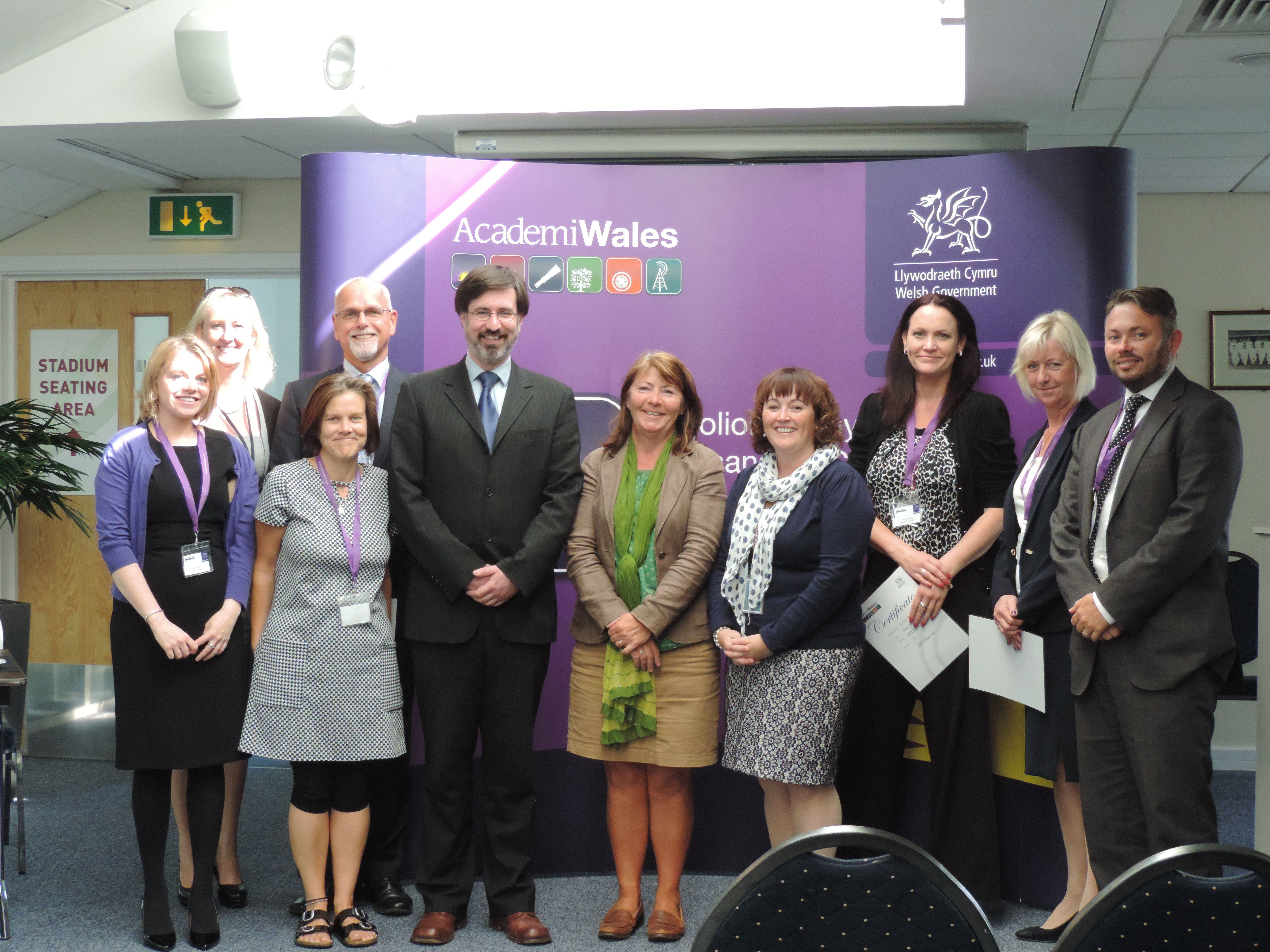
    On Monday I was in Cardiff for a celebratory lunch, hosted by Academi Wales, to recognise the achievement of graduates from the PgCert Public Services Governance programme. Below is a copy of my talk:


    Public Services Governance – Graduation

    Thank you to Academi Wales for inviting me to give this short talk. It’s great to be in Cardiff again and once again the sun is shining. And what a terrific venue for this celebratory lunch. It really is wonderful to see you all again. You should be really proud of what you have all achieved – seriously, well done!

    I have been asked to give a short talk on how the partnership was established, how students progressed through the programme and then finish by discussing what happens next.

    When I started to think about this talk and what I would say one thing came to my mind immediately – that the more things change the more they stay the same.

    On 19th September it looks increasingly likely that the UK Government will be entering into negotiations with the Scottish Government about the progress of establishing an independent Scotland. This may seem like a revolutionary moment. Yet many things will remain the same. The EU will still exist, the UN, the World Bank and the global money markets. And the Scottish Government and rest of UK Government will continue to operate within this global context.

    But of course there will be some change. And it is at times of change that I believe the need for good governance becomes even more critical.

    I feel that Academi Wales have shown great foresight, and indeed courage, in investing in public service workers from across Wales to undertake this programme. And you are very fortunate to have had that opportunity.

    It was back in July 2012 that I got the first call from Academi Wales that they were interested in sponsoring some students on the programme. Following that a value for money exercise was conducted from which we were, I believe, 3rd out of a possible 90 suppliers. But more than that, Academi Wales felt that our programme, the first of its kind in the UK, was the most contemporary and relevant to public services workers in Wales.

    So in December that year I came to Cardiff to the Welsh Government offices where we, along with Prof Catherine Farrell from the then University of Glamorgan, jointly discussed and agreed the detailed structure and content of the programme. This was to include four modules: public services governance themes and issues, public finance, leading change and internal communications. These were seen to be most relevant to those working in a post-Williams Review Wales.

    Then, in April 2013, I came to deliver the two days of module delivery on the first module. On meeting the students I was immediately struck by their enthusiasm and commitment to the programme. That said I can’t say I was surprised, as we’ve always had excellent students on our public services programmes. This is, more than anything, what makes my job so worthwhile. Sharing ideas and practice with experienced and skilled public service workers. It really is an absolute joy.

    Since then the university have established a new masters level programme in public services leadership. This programme draws on many of the aspects of governance within the PgCert but with a focus on coaching as a form of leadership. It is a collaborative programme with City of Edinburgh Council, Dundee City Council and Orkney Islands Council and we currently have over 50 students on this programme. Unfortunately Academi Wales are no longer in a position to support any bursaries, due to budget cuts, but students should continue to nurture the relationships that were established in this programme and build new relationships with students and graduates from all of our public services programmes.

    I would like to thank Paula James and Jo Carruthers from Academi Wales, Prof Catherine Farrell from University of South Wales, and my colleagues from QMU for having made this programme work. But most of all I would like to thank you, the former students, for having made this such a positive and fulfilling experience for me.

    Much of the nature of education is about change. It’s about personal change. About challenging your own assumptions and values. About challenging your practice. You may indeed feel that at the end of this programme you’re a different person. Now you are entering a new beginning. Having successfully completed the programme it is now up to you to implement what you have learned and apply those critical thinking skills to inform your practice: to deliver better governance and delivery of public services in Wales.

    But I would also like to remind you that some things won’t change. First and foremost you will always be part of the QMU family. This doesn’t just mean that you’ll get mail from time to time asking you to donate to the university. But you will also get mail from me asking for your views on governance and public services. Your views still matter. At the same time I will still be there. I and the other academics from the public services programmes will always be available to continue sharing ideas and learning. That does not stop just because you have graduated. The learning continues.

    I would encourage you all to maintain and continue to build the relationships that have been built as a result of this programme. Continue to share ideas and learn from each other. Whatever changes the future brings the need for good governance remains constant. As a graduate of this programme you are ideally suited to meet those challenges. I will continue to provide any support I can and will continue to work with Academi Wales and Prof Catherine Farrell as they see fit. I wish you all the very best.

    Thank you.


    Graduates and staff
    Graduates and staff
  • Using Social Media in Learning and Teaching

    I was invited to give a presentation at University of the West of Scotland at their Student Experience Learning and Teaching (SELT) event on 2 April 2014. You can see all presentations via the Storify which is linked below.


    The topic I was given to present on was ‘Use of Social Media in Learning and Teaching at Queen Margaret University’. In this I drew on my own experiences of using social media within my learning and teaching practice. You can view a video of my presentation here:


    I was delighted, on the very next day, to receive an ‘Innovative Teaching’ award at the QMU Student, Teaching and Representation (STaR) awards. This award was, in part, in recognition of my use of social media. More information on this is available here: STaR Awards.

  • SR2013

    Politics vs Economics

    Less than 24 hours since the Chancellor stood up in Parliament to announce his spending plans for 2015-16 much has already been written about both the style and content of his speech. Needless to say (and despite the Chancellors protestations this morning) this was a highly political speech with the upcoming general election firmly in view. Whoever wins in 2015 will undoubtedly inherit a very different public sector than existed in 2010.

    When analyzing the content of the Chancellor’s statement much has been said about the extent of continued cuts to public service spending. But these levels of cuts were always going to be the case. The current position of our public finances would not allow for anything else. What is more there is little political contention about the need for cuts.

    However, not all public services were cut. Certainly not in equal measure. We can perhaps learn more from what the Chancellor chose to (in relative terms) protect as we can from those things he chose to cut.

    Winners

    In terms of departmental spending international development once again comes out well with a 7.8% increase. Of this is due to international commitments to 0.7% of Gross National Income (GNI). The other big winner is the Single Intelligence Account which goes towards the intelligence services where there is a 3.4% increase. There is also to be a new £1 billion Conflict, Stability and Security Fund under the National Security Council. Finally there is to be £210 million investment in the National Cyber Security Programme (NCSP). In other measures there is to be no further cuts in the number of armed forces personnel and they are to be protected against any changes to progression pay.

    The NHS is also relatively well protected with the Department for Health receiving a 1.9% increase. Although, the administrative budget for the NHS has been cut by over £1bn (a 27.3% cut in administrative costs). Interestingly the government has set aside significant funds to support further transformation in the way our health and social care services are provided. A £3.8bn budget has been allocated to support more integrated health and social services for older and disabled people. They have also ring-fenced £350mn of capital funding for projects to improve local integration including the sharing of patient data between the NHS and local authorities.

    Finally the government has protected the elderly from much of the impact of the cuts. Of particular significance the state pension has been excluded from the new welfare spending cap. Given the ageing population and the pressure this will potentially place on public finances in the future this is an interesting move. The Warm Home Discount will provide £320m for discounts on electricity bills to the least well-off pensioners. The Department for Work and Pensions budget has been cut by 8.8% but most of these cuts will be from the administrative budget which has been cut by 20.3%.

    Losers

    Perhaps the most significant loser in all these cuts is the very group who are charged with implementing these changes – public service workers. Departmental administration budgets have been cut by a further £1.9bn. This means that most departments will have had a total reduction of 40%-50% in the six years from 2010-2016. Pay increases have once again been limited to 1% and automatic progression pay will be abolished in the civil service by 2015-16. It will also be abolished for teachers, become non-contractual and linked to performance for prison officers and also significantly reformed in the health service and police service.

    This is particularly the case in local government which has already lost 32,000 posts in the last quarter of 2012 alone. The Department for Communities and Local Government faces a 28.3% cut in their total departmental budget although much of this is partially offset through capital investment commitments. The local government budget is cut by a further 2.3%. Bodies such as sports and arts organisations, that have previously been reliant on local government support, are likely to face very difficult times particularly given wider cuts to arts and sports funding. The use of charitable trusts, local government charging and National Lottery funding as ways to stymie the impact of these significant cuts. Even at this it is hard to see how local government will continue to deliver their statutory obligations in the context of these additional cuts.

    Implementation

    Whether or not all these changes can be implemented by 2015 remains to be seen. However, the statement of intent is clear. With a further 144,000 public sector jobs to go by 2015-16 the government is radically altering the nature of the UK economy. It is important to remember that public sector pay is already low. Yes, average pay in the public sector is higher than in the private sector. But this negates the fact that public service workers do not do the same work. In fact public service workers are disproportionately employed in professional roles such as doctors, nurses and teachers. When comparing like-with-like the reality appears much more stark. Take, for example, that those with a degree-level qualification get paid 4.1% less in the public sector than in the private sector.

    These public sector professionals are now faced with the challenge of meeting government targets for cuts and efficiencies at the same time as continuing to deliver vital public services. No wonder nurses, teachers and carers are among the most stressed workers. Public service jobs are already tough as I have blogged about here and here. This is about to get even tougher. For employers the challenge will be to continue to attract, train and retain skilled public service workers in the face of such adversity.

  • SR2013 and Progression Pay

    Osborne’s attack on public servants won’t work

    By Ian Elliott, Queen Margaret University

    George Osborne’s populist attack on public sector salaries made for just the headlines he wanted. He promised to end “automatic progression pay” in the civil service by 2015-16, and to work towards ending it in the education system, the NHS, the prison service and police service.

    The issue is a good deal more complex than the easy headlines make it out to be, however. Pay reform will be very tough to implement, and its too early to tell if the political will exists to see it through.

    The text of the Spending Round 2013 report can help interpret what has been announced in the House of Commons. It is inevitably more cautious than the headline writers. But in between the nuanced language of the report and the sensational headlines, we can get a sense of what actually lies ahead for public servants.

    The government has only committed to make a plan, not to end pay progression immediately. These plans will undoubtedly take some time to complete and are likely to come under review with the election of a new government, of whatever party, in 2015.

    Teachers and workers from the health, prison and police services, are likely to see little change in their progression pay any time soon. It’s clear that some reforms will be taken forward, or are already underway, but there is no clear timescale for implementation.

    Many of these workers have not received “automatic progression pay” in many years anyway. For some, progression pay may already be linked to performance. For others, it has been frozen for some time. For the minority who do still receive progression pay purely as a result of time in post there is likely to be a move towards linking progression pay to satisfactory performance. But again, something tells me this won’t happen tomorrow.

    Even if the government were being more forceful, there are some real implementation issues involved. Progression pay is typically a contractual obligation, and changing the terms and conditions for public service workers would therefore mean renegotiating all these contracts. Given that there are more than 200 separate bargaining units in the civil service, each with their own pay structures and their own terms and conditions of employment, politicians are likely to avoid this task in the run-up to a general election.

    It is important to remember that what is at play here is politics. Whatever happens regarding progression pay in the public sector, the chancellor has set out his stall for the upcoming election campaign. There is an apparent political desire to play to the galleries in stating that “some public sector employees see annual pay rises of 7%”, referring to progression pay as “antiquated” (though it is being retained in the armed services) and drawing distinctions between public and private sector pay.

    Again, pay realities are very different for many public sector workers. For example, three quarters of council workers currently earn less than £21,000. Almost two thirds of civil servants earn less than £25,000. Yes, average pay in the public sector is higher than in the private sector. But it is also true that a significant number of low-paid jobs in the public sector have been privatised over the last 20 years. Those who are left are disproportionately employed in professional roles such as doctors, nurses and teachers.

    These same professional workers face the challenge of continuing to deliver vital public services such as healthcare and policing with fewer staff and less resources. Additional cuts risk affecting stress levels as well as morale, productivity, recruitment and retention. Nurses, teachers and carers are already among the most stressed workers according to the Health and Safety Executive.

    At a time when public services are facing such significant change and uncertainty, the biggest challenge for employers will be to find new ways to attract, train and retain skilled public service workers in the future. Cutting progressive pay, or even talking about planning to, won’t help.

    Ian Elliott does not work for, consult to, own shares in or receive funding from any company or organisation that would benefit from this article, and has no relevant affiliations.

    The Conversation

    This article was originally published at The Conversation.
    Read the original article.

  • Why I don’t like email

    Please don’t email me

    Every semester when I start my undergraduate teaching I begin by setting the ground rules. Things like the importance of attendance, the need for extensive reading and so on. All what I would expect is fairly standard stuff. However, one area where I seem to differ from many academics is in my approach to student support. I tell all my undergraduate students not to email me.

    This may seem unsupportive. I should stress that at the same time as telling students that they should not email me I do explain why and I also explain the variety of other ways they can and will receive support with their studies. However, this message can sometimes get lost. Given the increasingly consumerist nature of students and marketisation of higher education I thought it would be helpful to provide a blog post explaining my position on this issue.

    The following provides a detailed list of my objections to email as well as touching on the other ways I provide support to my undergraduate students.

    1. Email is distant

    Email is an impersonal and distant mode of communication. This does have some advantages, for example with distance learning students. However, I see my full-time undergraduate students at least twice a week – once in lectures and once in seminars. The use of email can create a sense of distance where, in my view, it should not exist. Consequently I tell all my undergraduate students that, rather than send an email, they should rise any questions they have in class.

    Now there is an important exception to this rule. I do think there is a need for use of email with postgraduate students, many of whom are either studying part-time or by distance learning, and so do not have the weekly contact that full-time undergraduate students have. It is also fair to say that email contact is useful outside term time for all students.

    2. Email is individual and hidden

    Students who receive significant advice or support from lecturers via email communication can, in effect, have an unfair advantage over those who do not receive this information. Rather than responding to individual students by email I devote the first 10 mins of class to an open Q&A session. This allows me to relay answers to all students at the same time – thereby eliminating any favoritism or the likelihood of receiving several separate emails on the same topic. Where any questions relate to assignments I make sure to upload the question and reply to our university Virtual Learning Environment in the form of FAQs so that all students can see the reply – and these FAQs are copied over into future years.

    3. It takes seconds to send and minutes to reply

    Sending email is very easy for the sender. It can take seconds to write an open-ended question such as “I am having difficulty understanding the distinction between concept x and concept y. Could you please tell me how these two concepts relate to the theory of z“.

    That may be a very good question. But while it might take seconds to send, replying is likely to take some minutes. As a result we can find much of our time filled up with what many refer to as “dealing with email”. Alternatively, answering such a question in class is likely to take less time and importantly can stimulate a greater discussion among the students and so support their peer-to-peer learning.

    4. Clog up inboxes

    The desire to be inclusive when using email often leads to sending one email to multiple recipients. From one email you can then receive multiple replies which can very quickly help fill up an inbox. Alternatively using discussion forums or social media will also encourage replies but without the limitations of the email inbox.
    Email, sucks.

    Source: Kristiewells (available here: http://www.flickr.com/photos/kristiewells/6022279419/)

    Ultimately email inboxes are never big enough. No matter where you work you will undoubtedly have, at some point in your career, reached a point where your inbox is full. This can block other emails from getting to you. As such it is best to encourage less use of email – as well as proper management of your inbox (which I must confess I don’t always do).

    5. Lack of tone or inflection.

    Part of the difficulty in replying to email is the lack of tone or inflection that is possible. In effect this means that we can spend significantly more time drafting an email in order to fully explain what it is we are trying to say than would be possible verbally. There is also the risk that students who write emails, potentially in the heat of the moment, send something which does not entirely reflect their particular concern(s). This can lead to an answer that does not entirely address their concerns – and so lead to follow-up questions and further email exchanges.

    6. Email as a weapon.

    There is also a sense that some people may use email in order to receive a written response with the intent that this can be used as “evidence” later. This places even greater onus on us to carefully craft emails. The excessive use of email in this way is also an indication of a lack of trust which should be resisted at every opportunity.

    7. Computer security

    Recently my personal email account was hacked. All my contacts were sent an email, seemingly from me, with a link which (I assume) was linked to a virus. This highlighted for me the inherent insecure nature of email compared with verbal communication. Social media is not immune to such attacks either and so again verbal communication can be preferable.

    8. Casual formality

    Emails have the immediacy of a tweet or a text but retain an inherent degree of formality more akin to letters. This makes it difficult to judge what is an appropriate tone. The immediacy of email also contributes to assumptions that all emails will receive a response – and an almost immediate response. In this sense social media can be easier to use as these platforms do not tend to have the pretense of formality that is often associated with email and responses are limited to (in the case of Twitter) 140 characters.

    9. Antisocial

    There is no substitute for face-to-face contact. At the same time there isn’t enough time in the day to meet with all students separately and so some ‘distance’ support is important. But in my view email is, among all alternatives, one of the worst forms of communication method. Again the closed and impersonal nature of email makes it, in my view, a deeply flawed communication method. In comparison many social media tools, such as Twitter, are open to all and so can stimulate a wider discussion and debate. In that sense I think the use of Twitter is actually better than email. It is also important for lecturers to have regular open office hours where students can simply pop in without having to set up a meeting (something which again usually requires email).

    10. The idea that email equals support

    Some academics may feel that being available (virtually) to all students 24/7 demonstrates a commitment to student support. But the impersonal and distant nature of email, combined by the lack of inflection or tone, can mean that important context can be missed. It may be that what the student is asking about is a symptom of a greater problem which would be raised through a face-to-face discussion. It is also important to stress on students the importance of attendance and that email correspondence combined with engagement with the Virtual Learning Environment does not represent a substitute for face-to-face contact. Finally it is important, in my view, to encourage students to be independent learners who have the confidence and aptitude to find information for themselves.

    Final thoughts

    Now all of the above is also qualified by the fact that when an emergency arises which cannot wait until the next class then of course students still can use email. It should not however be the default option for any and all queries. It is important that lecturers provide clear and full (and up-to-date) information to students via module handbooks and Virtual Learning Environments. These sources should help to eliminate the need for students to revert to email communications. Lecturers should also be available at the start and end of classes to address any ongoing concerns and to have regular office hours where students can ‘pop-in’. In my view the use of email is no substitute for these methods of support.

    So if you are an undergraduate in one of my classes please note that you will find all relevant information about the module and assignment via the Virtual Learning Environment. Important information will be reinforced in classes. There will also be an opportunity at the start of every class to ask any questions you may have. But unless for an emergency please do not email me.

  • Innovation

    Recently I met someone with the word innovation in their job title. This struck me as quite interesting. I wondered, how innovative do they need to be in their job? Do they do all the innovation in their workplace or are others explicitly involved? Now I don’t want to question the work of this particular individual – which I actually know to be really important and valuable work. But rather I think there is a broader issue about the current fascination with all things ‘innovation’ within public service organisations.

    Innovation as a contemporary issue

    Current examples of how innovation is being promoted in the planning and delivery of public services include,

    Innovation vs invention

    The first thing to note about innovation is that it is not about experiments and people in white coats. The easiest way to think about innovation is about applying existing ideas or products in a new setting. That is what makes innovation different to invention-which is the creation of new ideas or products.

    In this sense there is a long history of innovation in public services (although it may not always have been labelled as such). For example, where one local authority uses an example of good practice from another local authority that would be an example of innovation.

    Innovation as a ‘good thing’

    But is innovation a good thing in public services? Well yes, sometimes it can be. When people refer to innovation there is an implicit assumption that it is linked to some improvement – and so it should be. What it is not is doing everything you did before but with fewer staff and resources. There are many other words for that sort of thing.

    In this regard it is unfortunate that the word innovation is becoming ambushed within some circles, along with other approaches such as lean public services, by those with alternative motives. Therefore it is important to understand exactly what innovation is and how it may help deliver better public services.

    At the same time innovation may not be a ‘good thing’ and does not necessarily deliver better public services. Taking into account that innovation can be easiest understood as the implementation of an existing idea or product in a new setting we must ask, is it always appropriate for a public service to experiment with a new approach? Inevitably this will often involve some investment and success cannot be guaranteed. Do we (the public) want more risk-taking in the planning and delivery of public services? And are we willing to accept failure as a ‘learning experience’ when things go wrong?

    Implementation of innovation

    Ultimately, as with all change activity an innovation must be implemented properly and sensitively. Those who are charged with implementing the innovation (public service workers) must be engaged and should feel a degree of ownership of the change. The public must be willing to support more risk-taking and scope for mistakes in the delivery of public services. Finally it is important that the public recognise and support the improvement that will come from the innovation. Otherwise what’s the point!

    The final point to note about innovation is that those companies who are particularly well known for it, say Dyson, Google, WL Gore, all invest heavily in it, are committed to innovation in the long-run and give their employees the autonomy to make changes where they see fit. For example, at W.L. Gore employees are given 30 minutes per week for ‘dabble time’ – time to do their own projects outwith their day to day duties. In other words innovation may lead to cost savings, or it may generate new revenue streams, but it is certainly not something that can happen on the cheap or during an away day. Nor is it something that can ever be the responsibility of a single person or “innovation centre”. Where it works well it is a common thread through everything the organisation does – from recruitment of staff to delivery of the business. It must be an integral part of the organisational culture.

    Conclusion

    There are lots of examples from across the private, public and Third sectors where innovation has delivered real improvement in the delivery of services. This does not need to be a particularly large project to count as innovation and nor does innovation necessarily require huge investment. However, those organisations that are known for innovation tend to invest in innovation, encourage their staff to experiment (and learn from mistakes) and they all take long-term view of innovation. One of the complexities of public service organisations is the nature of being accountable to the public. Unless your ‘public’ are bought into the idea of innovation there are always going to be huge risks involved. What’s more, if you have an organisational culture where “computer says no” is the automatic default or where budget cuts are the primary agenda item then you will need to change your culture or your financial situation first before thinking about whether innovation is for you.

  • Lean Public Services

    I was recently asked by a student to provide a brief account of the advantages and disadvantages of applying lean management systems in the delivery of public services. This is my quick attempt at a brief answer!

    First of all, what is Lean Management? This is actually a rather difficult question as terms such as continuous flow manufacture; stockless production; lean manufacturing; Lean thinking; Toyota production system and systems thinking have all become associated to a greater or lesser extent with ‘Lean Management’. However, for me, this short advert for Honda (a key proponent of lean management) encapsulates the essence of lean management:

    Key points from this clip:
    • there is no waste;
    • every part of the process has a purpose;
    • everything happens in a fluid sequence;
    • everything happens ‘just-in-time’;
    • everything ‘adds value’ to the process.

    First of all I think there is a lot to be said for a Lean Management way of thinking. Within public services perhaps the key text in this area is John Seddon’s Systems Thinking in the Public Sector. Now, there are probably some who would automatically switch off at the very mention of Lean Management. It could be dismissed as ‘just another management fad’. But actually there is something to it and it is worth considering the positive aspects of Lean.

    In my view, Lean is predominately about creating a learning organisation with empowered and autonomous workers. This is encapsulated in Mr Ohno, the Toyota executive who has been credited with the development of lean management, refused to have any of the lean management approach written down as then it would become crystallised and difficult to change – and would then stifle innovation. For Mr Ohno it was important that lean management continuously change and development. Consequently one should always be wary of any text or consultant who claims to be prescribing a lean approach (NB: that’s not to say that some books or consultants may have interesting things to say on the subject).

    Nonetheless, there are some basic principles which can help with understanding a lean management way of thinking. The main focus of lean is on finding efficiencies in production through the elimination of all waste. Importantly the definition of waste is very broad in this area and has nothing to do with bins or recycling. Waste, in a lean management perspective, is any activity that does not directly contribute to satisfying customer needs. That is a quite radical way of thinking. Take a moment to consider the tasks you perform in an average week and ask yourself how many directly contribute to the satisfaction of your ‘customers’?

    This is a useful way of thinking. So, for example, how is attendance at any one particular meeting going to directly enhance your customer’s satisfaction? Also, how does your organisation reward attendance at meetings vs delivery at the front line? However, this line of thinking when applied indiscriminately can be completely inappropriate; for example, empty hospital beds could be viewed as waste under this approach. Overall though there are undoubtedly many things that all businesses and organisations do that do not directly serve the needs of customers. As such this is a valuable mind-set to have.

    It is workers at the front line of operations who are best placed to identify areas of waste and so the Toyota approach to lean management was to empower workers to identify areas of waste and to take responsibility for the inspection and quality control of their own work. A key argument being that failure, in the form of defective goods, represents a form of waste. Therefore a lean approach requires a commitment to ‘zero defects’.

    In the public services John Seddon argues for the abolition of the Audit Commission, stating,

    People’s work should not be inspected; people should be their own inspector.

    Seddon (2008: 63-64).

    However, this seems like a rather unrealistic goal within public services, even where the current UK Government may be working towards abolishing the Audit Commission there will always be a need for auditing and scrutiny of public services – hence the development of a new auditing regime. This is due to the demand (what John Seddon would describe as ‘failure demand’ for accountability in public services when things go wrong). This is heightened by the extent to which public services are often dealing with life-or-death situations with highly vulnerable groups. As the case of Mid-Staffordshire NHS Trust shows, where failure does occur in public services it is important that lessons are learned and there is some accountability for the mistakes that have happened.

    At this point it would be wrong to conclude that Lean is something that can only work within a manufacturing setting. As this article from the Harvard Business Review illustrates there is some relevance to the service sector. However, public services, which have their own distinct challenges, have particular characteristics that make a lean approach more difficult to achieve.

    To some extent a lean management way of thinking is important in public services today. Public services are increasingly expected to be responsive to ‘customer’ needs and continuous improvement (and efficiency savings) have become an accepted part of how we plan and deliver our public services. However,  we are still accountable to the public and therefore good governance mechanisms are key. To an extent, when things go wrong in public services, we (the public) tend to fall back on bureaucracy – what policies and procedures were in place?; how was the service audited and inspected?; where does accountability lie?

    There are in fact some positive aspects of bureaucracy which are important not to forget. As the former Cabinet Secretary, Sir Gus O’Donnell, has put it,

    In this country you can renew your car tax if you can prove you own the vehicle, it is roadworthy and it is insured. In other parts of the world all it takes is knowing which palms to grease. Bureaucratic systems are colour-blind, gender-neutral and they don’t care what you sound like. That brings fairness in a way more discretionary systems can never match.

    Sir Gus O’Donnell, ‘There is no shame in being a bureaucrat’, Financial Times, 2013.

    Finally, what I have found in speaking to those who have experienced the ‘implementation’ of lean management in public services is that there is a fairly piecemeal approach. Those aspects that are seen to deliver cost savings are pushed through with some gusto whilst aspects of empowering and developing staff (where investment may be required) are quietly forgotten. Yet the successful delivery of a lean management approach is totally dependent on a committed and empowered workforce. It is, in many respects (as highlighted by John Seddon) the very opposite of a traditional command and control form of management. So as soon as someone tells you to implement lean management – and dictates how it is to be done – you should consider what they are actually meaning.

    There is lots more I could say on this topic but I was trying to keep this short so I’ll leave it for now. If you have any further questions please use the comments box below.